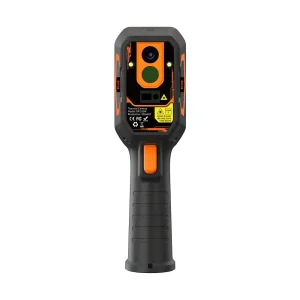
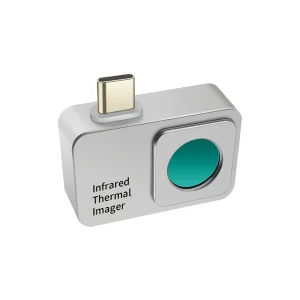
Explore our foundational range of handheld and smartphone-integrated thermal imagers engineered for high-precision diagnostic operations.
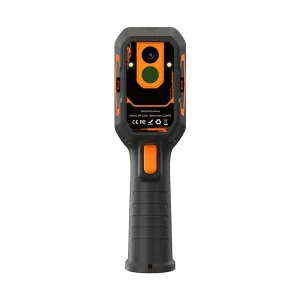
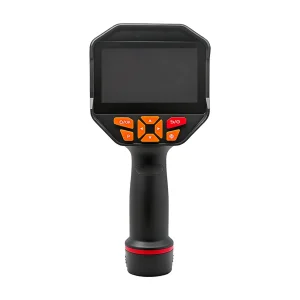
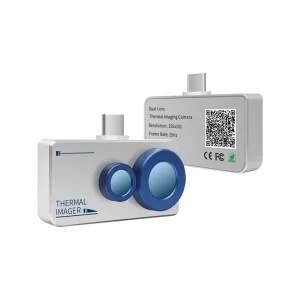
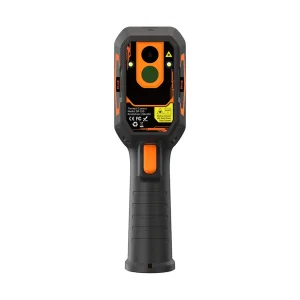
Understanding the interplay between optical focal length, detector pixel pitch, thermal sensitivity (NETD), and Johnson’s Criteria in commercial B2B thermal solutions.
Thermal detection range is scientifically calculated via Johnson’s Criteria. It evaluates the probability of an observer discriminating a target at specific distances based on line pairs across the target's critical dimension: Detection (1.5 line pairs), Recognition (6.0 line pairs), and Identification (12.0 line pairs).
Modern Uncooled Long-Wave Infrared (LWIR) focal plane arrays (FPAs) have transitioned from 17µm down to 12µm pixel pitch. Smaller pitch allows longer reach with smaller optics, reducing total manufacturing cost while maintaining high spatial resolution.
Noise Equivalent Temperature Difference (NETD), measured in millikelvins (mK), dictates signal quality. Our sensors maintain an NETD of <40mK (and down to <35mK in DP-series models), ensuring crystal-clear thermal contrast even in low thermal gradient environments.
The theoretical range $D$ to resolve a critical target size $H$ with optical focal length $f$, pixel pitch $p$, and required line-pairs $N$ is modeled by: $D = \frac{f \cdot H}{N \cdot p}$. When evaluating low-cost thermal cameras, buyers must look beyond raw sensor resolution ($160\times120$ vs $256\times192$) and examine the Instantaneous Field of View (IFOV) to guarantee accurate temperature measurement over distance.
| Camera Category / Resolution | Sensor Pixel Pitch | Thermal Sensitivity (NETD) | Human Detection Range (1.8m) | Human Recognition Range | Optimal Commercial Use Case |
|---|---|---|---|---|---|
| Entry Mobile Imager (96x96 / 120x90) | 17 µm / 12 µm | < 50 mK | ~ 120 - 180 Meters | ~ 30 - 45 Meters | HVAC Leakage, PCB Inspection, Electrical Outlets |
| Professional Smartphone Thermal (160x120) | 12 µm | < 40 mK | ~ 250 - 350 Meters | ~ 60 - 90 Meters | Building Energy Audits, Automotive Repair, Home Inspection |
| Advanced Handheld Thermal (256x192) | 12 µm High-Res | < 40 mK | ~ 450 - 650 Meters | ~ 110 - 160 Meters | Power Substation Audit, High-Voltage Lines, Industrial Motors |
| Industrial Dual-Light Series (384x288 / Custom) | 12 µm VOx microbolometer | < 35 mK | ~ 800 - 1200+ Meters | ~ 200 - 300 Meters | Perimeter Security, Substation Monitoring, Long-Range Fire Detection |
How technological democratization is driving high-performance infrared imaging into broader commercial, industrial, and consumer markets.
Historically restricted to defense and military contracts due to expensive Germanium lenses and cooled detectors, microbolometer technology has seen rapid price deflation. OEM/ODM volume production in China has compressed prices by up to 60%, allowing commercial contractors to procure professional-grade detection instruments at fraction of legacy costs.
The shift from bulky standalone meters to mobile attachments (such as the H1FB and H2FB series) represents a major industry pivot. By leveraging smartphone processing power, OLED screens, and cloud connectivity, thermal mobile dongles eliminate duplicate hardware costs while providing instant PDF report generation directly on mobile apps.
Modern industrial cameras incorporate visible-light sensors alongside infrared FPAs. Through edge AI processing, technologies like dual-light fusion overlay edge contours from visual cameras onto thermal gradients, drastically increasing target recognition distance without requiring larger, expensive optical telephoto lenses.
Navigating total cost of ownership, compliance certifications, and supplier engineering capabilities for enterprise-wide deployments.
Global B2B buyers seeking "discount" thermal cameras are not compromising on core calibration. Instead, strategic procurement departments select factory-direct partners who eliminate branding markups while preserving essential thermal drift compensation, blackbody calibration, and certified accuracy ($\pm2^\circ\text{C}$ or $\pm2\%$).
TCO extends beyond the initial purchase price. B2B clients prioritize modular repairability, robust firmware SDK support for custom IoT integrations, standard USB Type-C interface compliance, and long battery life/bus-powered architectures to minimize maintenance downtime in field operations.
Cross-border deployment demands strict adherence to regulatory standards. Tier-1 enterprise buyers look for supplier portfolios fully compliant with CE, FCC, RoHS, REACH, CB, UKCA, KC, and PSE certifications to ensure seamless international trade and jobsite safety conformance.
Leveraging parent-company infrastructure, rigorous R&D platforms, and automated mass-scale optics manufacturing.
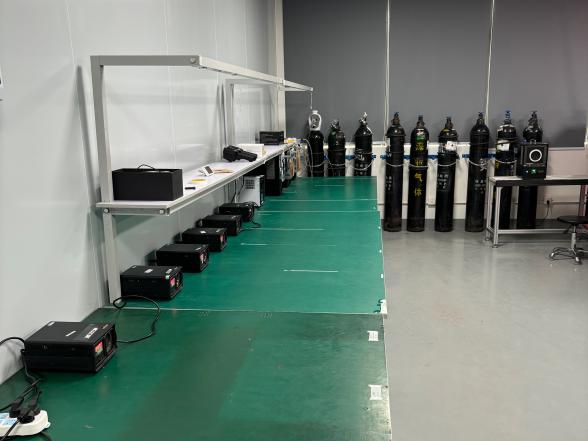
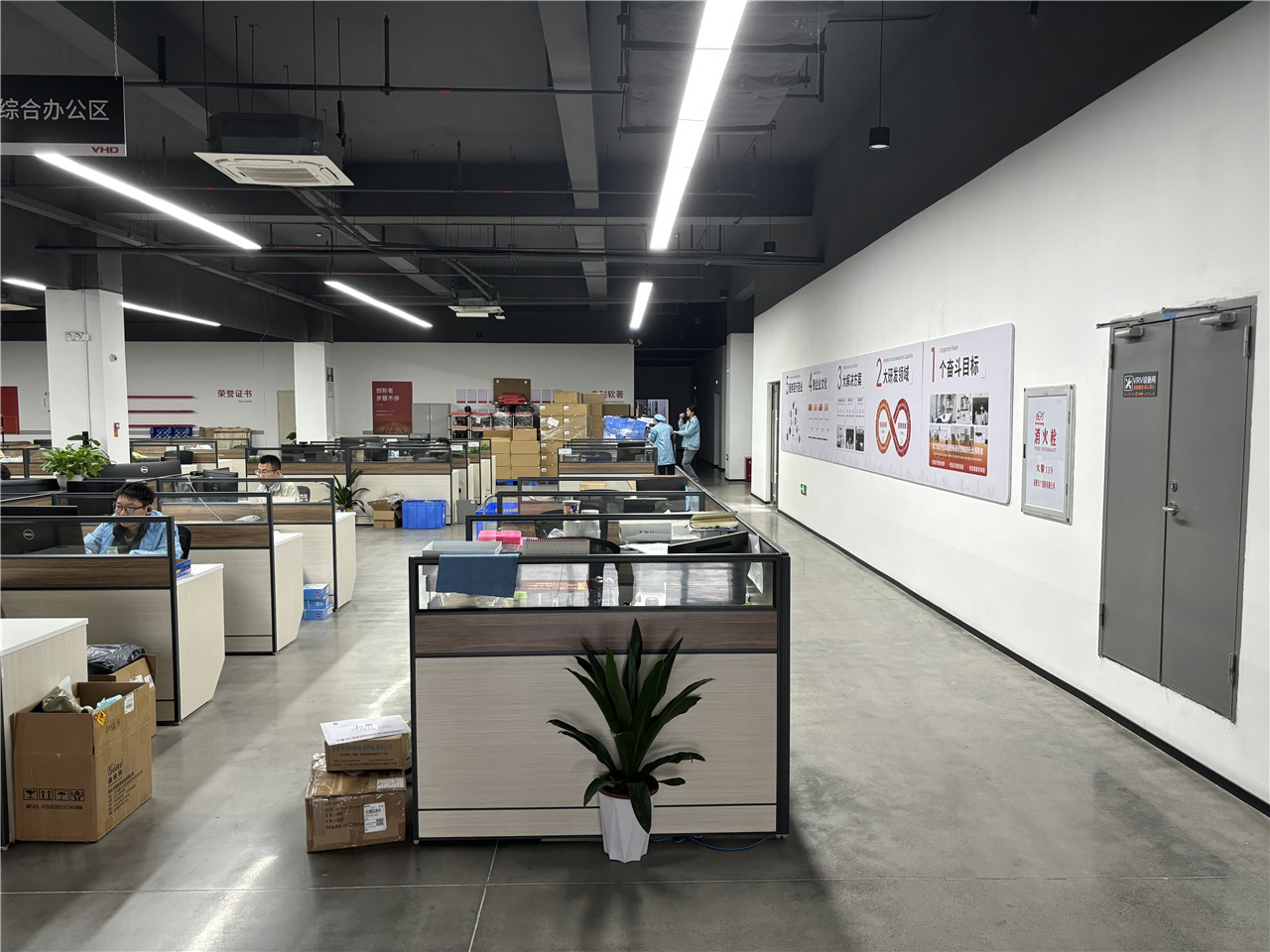
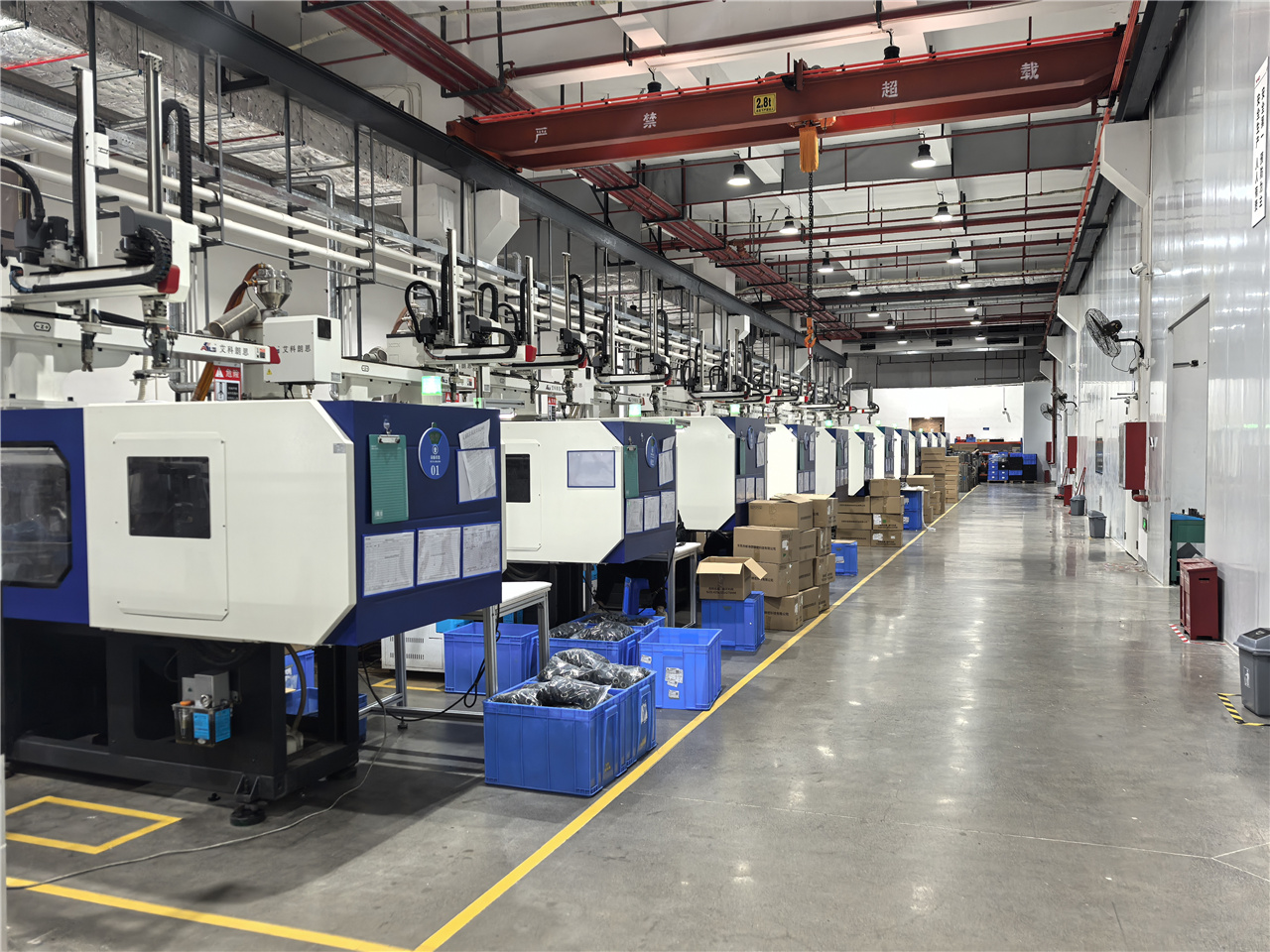
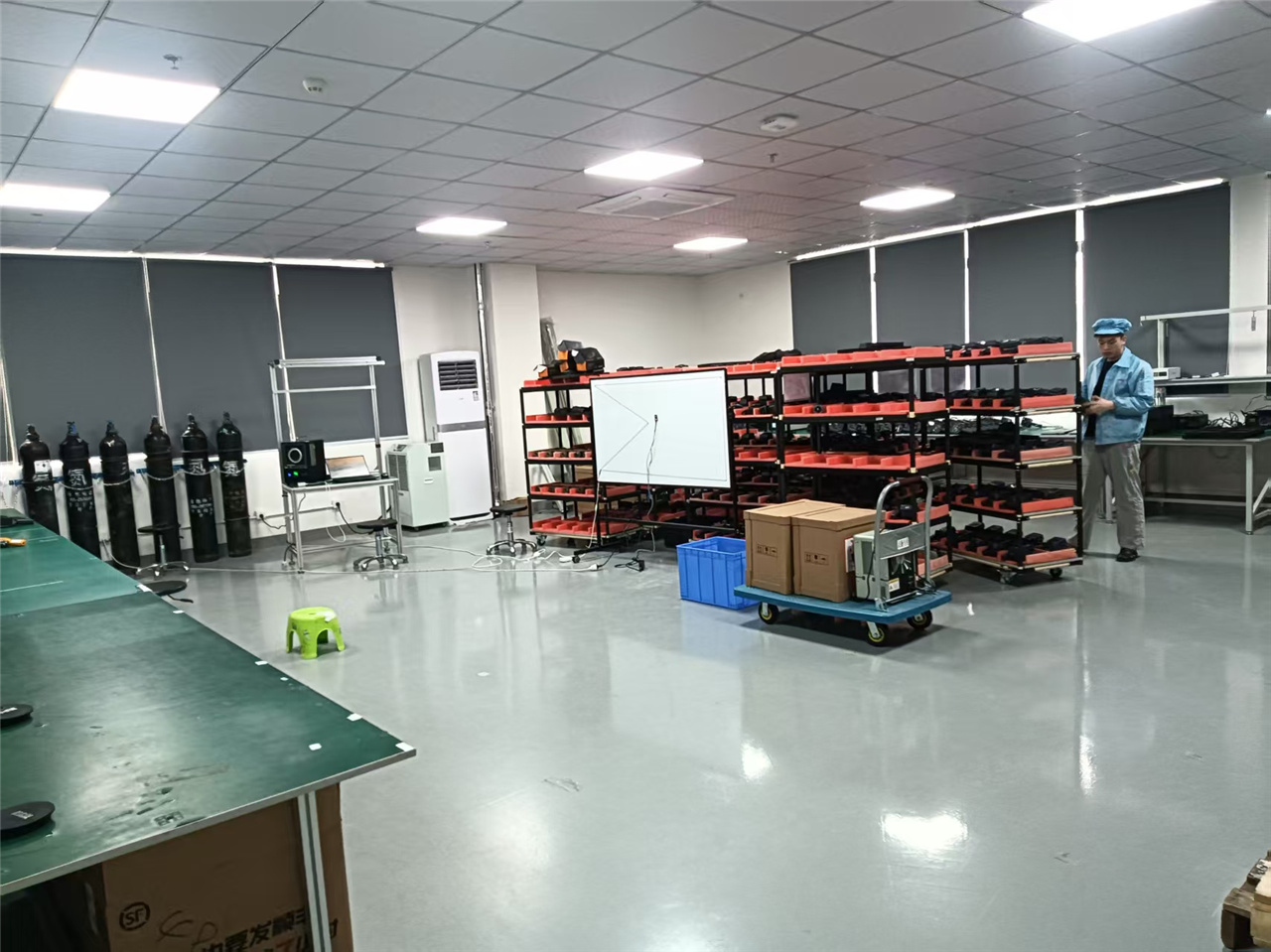
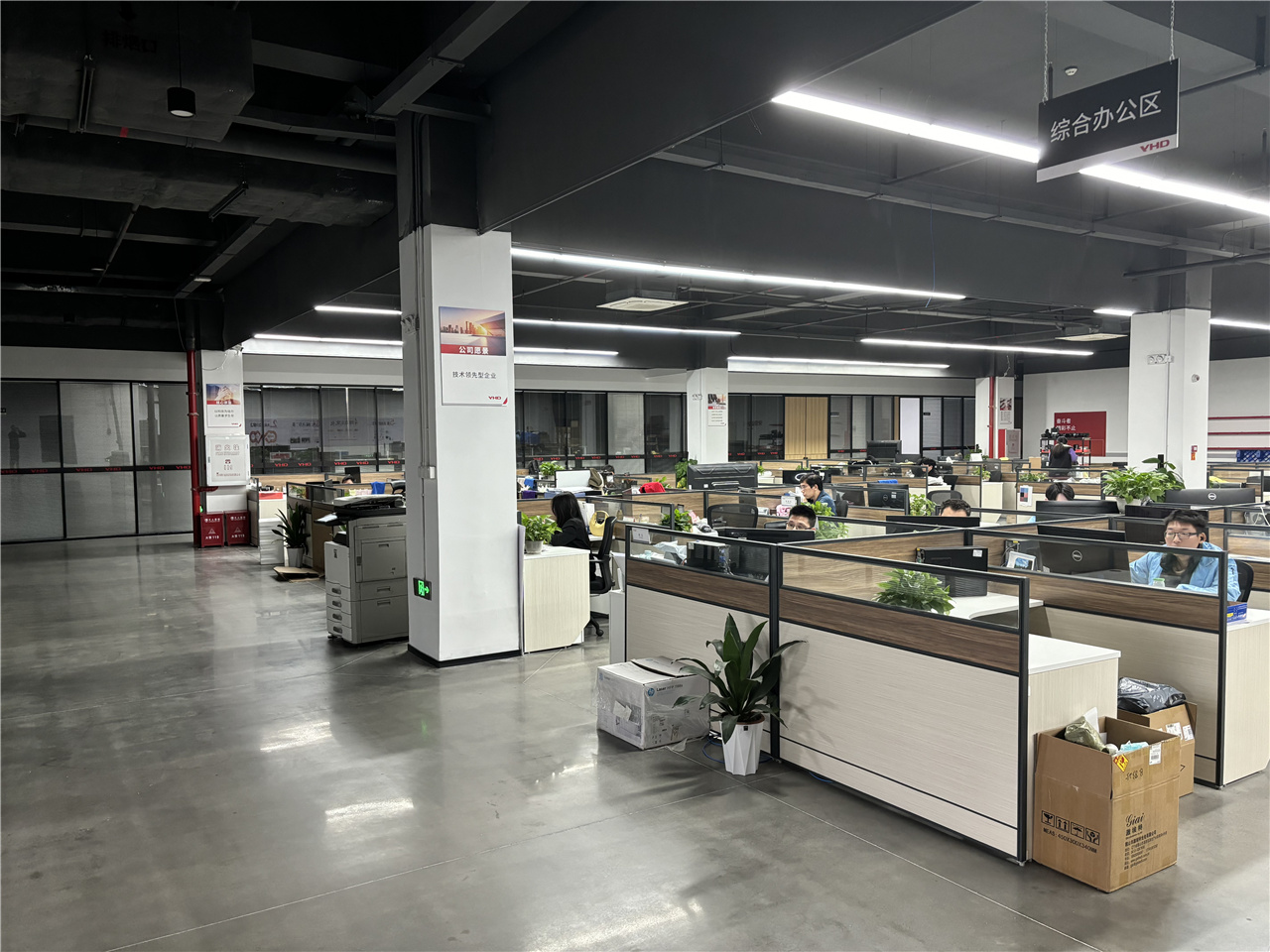
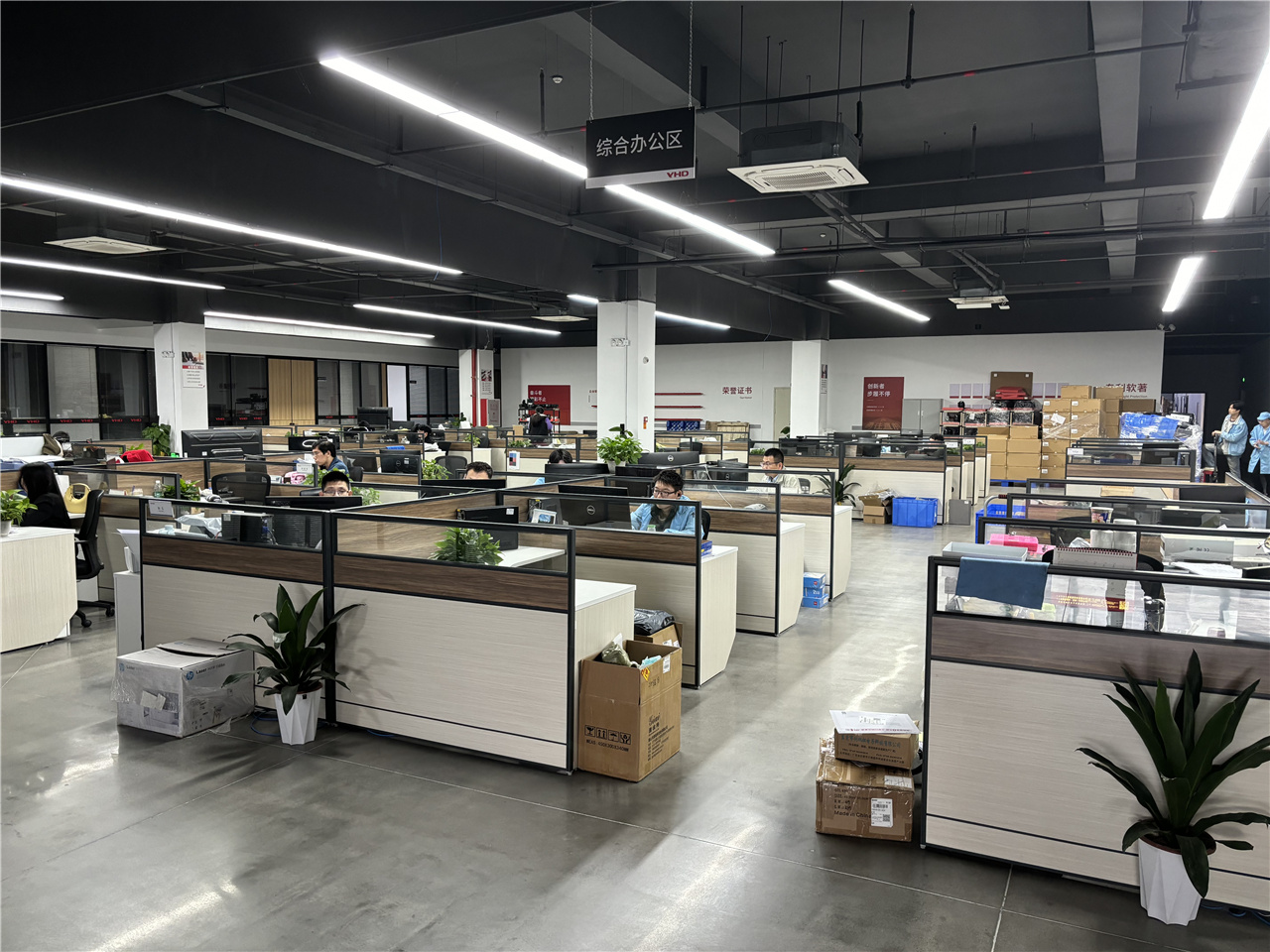
Shenzhen Dianyang Technology Co., Ltd. is a subsidiary of VHD (Shenzhen VHD Technology Co., Ltd.), a publicly listed company on the Shenzhen Stock Exchange. This strategic affiliation gives Dianyang unique access to VHD’s advanced R&D platforms, high-precision automated manufacturing systems, and rigorous quality management practices—enabling us to deliver thermal imaging products of higher reliability and consistency than typical ODMs.
Our dedicated engineering team applies Design for Manufacturing (DFM), Design for Testability (DFT), thermal simulation, and EMC pre-compliance analysis to optimize product performance and accelerate multi-market deployment.
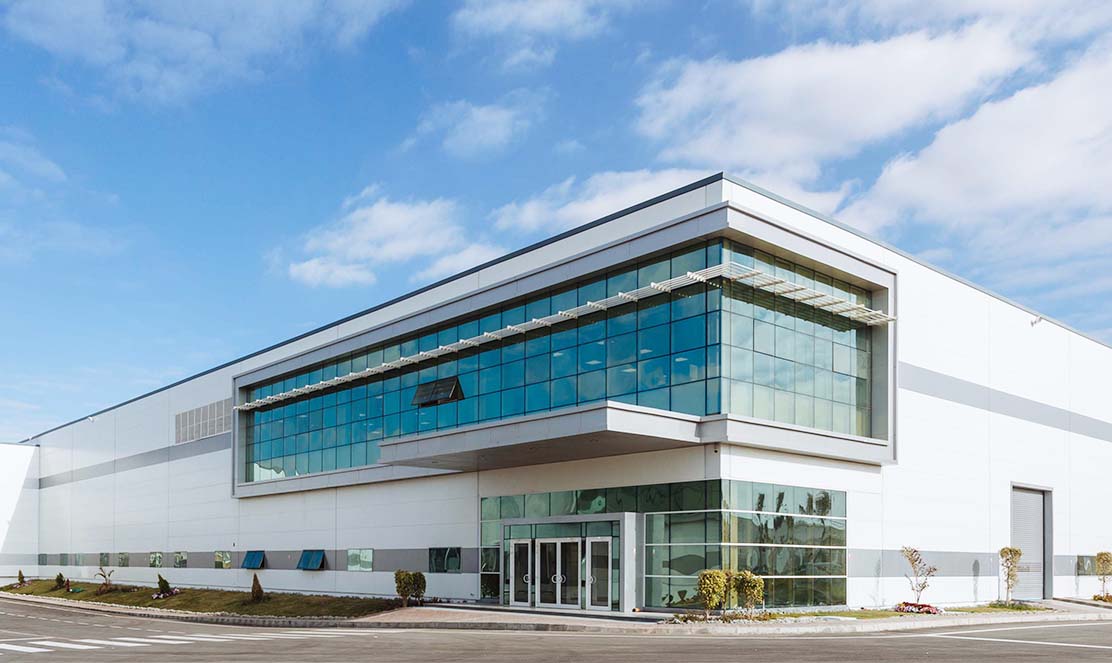
From high-voltage electrical grid inspections to non-invasive building diagnostic surveys.
High-voltage transmission systems generate micro-arcs and localized thermal spikes at loose terminal connections. Imagers like the DP-12DV and DP-25D enable technicians to scan switchgear and overhead lines safely from ground distance, preventing catastrophic power outages.
Infrared imaging easily isolates thermal bridging, missing insulation cavity pockets, and hidden moisture penetration behind drywall. Compact smartphone attachments like H1FB / H2FB allow energy auditors to deliver immediate visual proof to homeowners.
Precision calibration in thermal camera models such as the DP-12DV Medical Variant offers stable skin temperature measurement for triage points, veterinary medicine, and non-contact circulatory inflammation assessments.
Overheating motor bearings, clogged steam traps, and unbalanced solar panel photovoltaic cells exhibit clear thermal anomalies long before hardware failure. Handheld devices like the DP-38D assist plant engineers in predictive maintenance scheduling.
Detailed answers to key engineering and purchasing inquiries regarding thermal camera detection range and supplier selection.
Detection Range refers to the distance at which an optical sensor can distinguish an object from its thermal background based on pixel resolution (e.g., Johnson's criteria). Measurement Range (or Temperature Range) refers to the span of temperatures the sensor can quantify accurately (e.g., $-20^\circ\text{C}$ to $550^\circ\text{C}$). A camera may detect a human target at 300 meters, but accurate point temperature measurement (requiring at least a $3\times3$ pixel spot) requires a much closer distance.
A smaller pixel pitch (12µm) packs microbolometer pixels closer together. This allows a smaller physical lens (focal length) to achieve the same spatial resolution (IFOV) and detection range as a larger lens on a 17µm sensor. Because Germanium lens material is expensive, 12µm technology significantly reduces optical lens cost while providing identical or superior range capabilities.
Smartphone thermal cameras eliminate redundant hardware costs such as displays, processors, and high-capacity batteries, directly passing those savings to the customer ("Discount" pricing). Furthermore, smartphone apps allow technicians to stream real-time thermal video, apply multiple color palettes, generate analytical thermal reports on-site, and email them instantly.
Dianyang offers complete end-to-end ODM/OEM customization including optical housing design, custom focal length selection, PCB redesign, SDK integration for Android/iOS/Windows, brand labeling, custom firmware algorithms (such as custom color palettes and high-temperature alerts), and certification support.
Through our parent company VHD's R&D resources, Dianyang thermal cameras utilize intelligent temperature drift compensation algorithms combined with shutter-based calibration curves. This guarantees measurement stability of $\pm2^\circ\text{C}$ or $\pm2\%$ even when operating across ambient field fluctuations between $-10^\circ\text{C}$ and $+50^\circ\text{C}$.
Your strategic ODM/OEM partner for thermal imaging innovation, backed by listed corporate infrastructure.
Shenzhen Dianyang Technology Co., Ltd. specializes in ODM/OEM services for infrared thermal imaging solutions, including handheld thermal imagers, smartphone-connected thermal cameras, thermal analyzers, and thermal imaging telescopes. Our products serve global customers in power inspection, building diagnostics, firefighting, industrial maintenance, and outdoor applications.
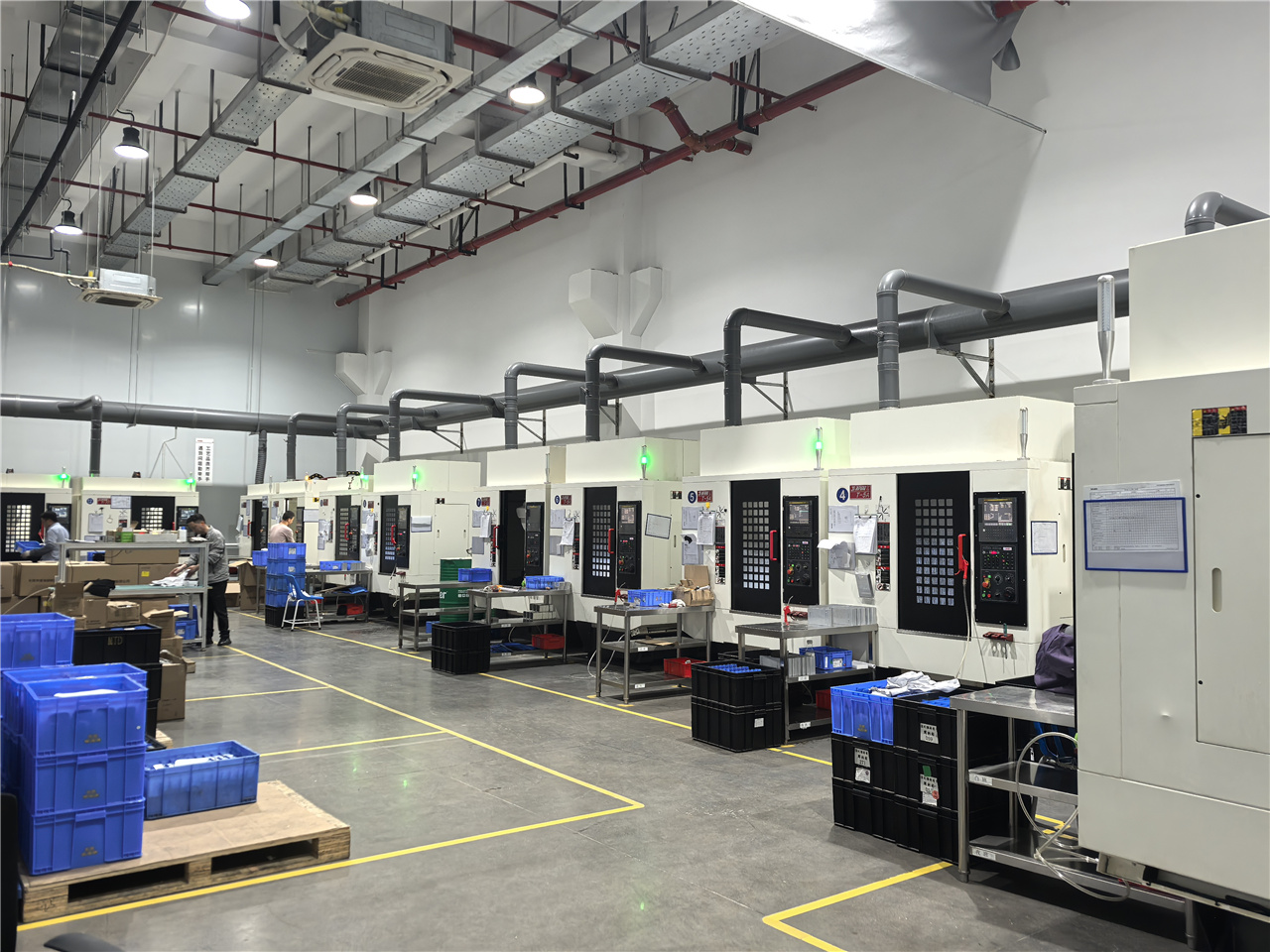
Browse our extended inventory of wholesale and OEM/ODM certified thermal cameras tailored for global distributors and industrial clients.
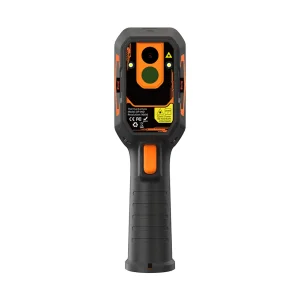
 Dianyang