What Is an Uncooled Thermal Sensor?

Time:2026-09-30 Author:Aria
0%

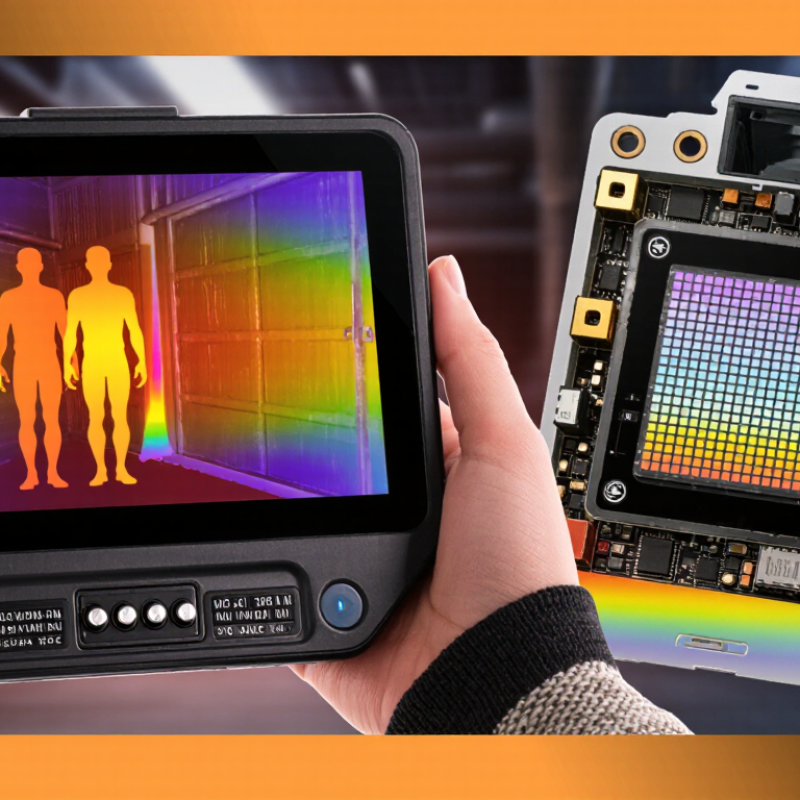
What Is an Uncooled Thermal Sensor? It is a solid-state device that detects infrared radiation without mechanical cooling. Most models use microbolometer pixels operating in the long-wave infrared range, typically from 8 to 14 micrometers. Each pixel changes resistance when warm objects emit thermal energy. Electronics then convert those changes into temperature patterns or thermal images.

The technology is practical, compact, and relatively affordable. A handheld inspection camera can start within seconds, while a security module can monitor a dark perimeter without visible light. According to Yole Group’s 2024 thermal imaging analysis, uncooled devices continue to dominate high-volume applications because they reduce system size, power consumption, and operating cost. MarketsandMarkets has also forecast continued growth in the global thermal imaging market, driven by predictive maintenance, automotive sensing, building inspection, and industrial safety. Report definitions vary, however. Some include complete cameras, while others measure only detector revenue.

That distinction matters. A sensor’s performance depends on more than pixel count. Engineers evaluate noise-equivalent temperature difference, calibration stability, frame rate, lens materials, and environmental sealing. A lower NETD can reveal a small heat leak behind an insulated wall. Yet humidity, reflective metal, airflow, and poor focus can distort the result. The technology is not magic. It needs trained interpretation and regular verification against trusted reference sources. Understanding these strengths and limitations provides a reliable foundation for examining how an Uncooled Thermal Sensor works, where it performs well, and where its measurements require careful judgment.
What Is an Uncooled Thermal Sensor?

Definition and Core Principle of an Uncooled Thermal Sensor

What Is an Uncooled Thermal Sensor?

Definition and Core Principle of an Uncooled Thermal Sensor

An uncooled thermal sensor detects infrared energy without cryogenic cooling. It operates near ordinary ambient temperatures. This design makes thermal imaging equipment smaller, lighter, and easier to maintain.

Its core principle is straightforward. Objects emit infrared radiation according to their temperature. The sensor absorbs this radiation and converts the resulting heat change into an electrical signal. Common sensing elements include microbolometers and thermopiles. A microbolometer changes electrical resistance when its temperature rises. The device then processes that change into temperature data or a thermal image.

In practical use, imagine pointing a sensor at a warm hand or an operating motor. The warmer area produces a stronger infrared response. Internal compensation helps correct for ambient temperature, but accuracy still depends on calibration. Surface emissivity, viewing angle, airflow, and reflected heat can alter the reading. A shiny metal pipe may appear cooler than it really is. That detail is easy to miss.

The technology is useful for equipment inspection, building checks, medical research, and environmental monitoring. It requires no bulky cooling system. However, it is not a perfect thermometer. Fast temperature changes, condensation, or a dirty optical window may reduce reliability. Field experience often reveals this gap. A thermal image can look convincing while its measurements need careful verification with suitable reference methods.

Main Components and How They Detect Infrared Radiation

An uncooled thermal sensor detects heat without a mechanical cooler. Its lens gathers infrared radiation from the scene and focuses it onto a detector array. Inside that array, thousands of tiny pixels absorb energy. A common detector type uses a microbolometer: a thin, heat-sensitive element suspended above a supporting surface. No moving parts are needed.

Here is the key change.
Absorbed infrared energy warms each pixel slightly, altering its electrical resistance. Readout circuitry measures these tiny resistance changes and converts them into signals. A processor maps the signals into an image, with different pixel values representing different apparent temperatures. The sensor does not see color or identify materials directly. It measures infrared energy, which can also reflect surface condition and viewing angle.

Small differences matter. The package often includes a temperature reference and correction circuitry because the detector itself responds to changes in its surroundings. Even a warm housing can affect readings. Calibration helps, but it cannot remove every source of uncertainty. In practical use, a person crossing a doorway may appear as a clear warm shape, while a reflective window can produce misleading patterns. That limitation is easy to overlook. Sensor resolution, lens quality, distance, and environmental conditions all influence the final image.

Common Types of Uncooled Thermal Sensor Technologies

Uncooled thermal sensors detect infrared energy without a cryogenic cooling system. They convert small temperature differences into electrical signals. That keeps systems compact, quiet, and easier to power than cooled detectors. They are common in handheld inspection cameras, building checks, and nighttime monitoring. A warm hand beside a cool window can create clear contrast, though glass blocks much long-wave infrared.

Microbolometers dominate thermal imaging. Each tiny suspended pixel warms when infrared radiation reaches its absorber. Its resistance changes, and readout electronics map those changes into an image. Vanadium oxide and amorphous silicon are common sensing materials. No cryogenic cooler. Microbolometers can provide detailed images, but pixel response may drift with ambient temperature and require calibration. Dust on the optics or a poor lens can soften edges, even when the detector is capable.

Thermopiles use joined materials to generate a voltage from a temperature difference. They often suit spot measurements, such as checking a warm pipe, and can use little power. Pyroelectric sensors generate an electrical signal when incoming heat changes, making them useful for detecting movement or changing thermal patterns. Less suited to some steady measurements. The categories overlap in practice, and comparisons on paper may not reflect field conditions. Optics, calibration, and the temperature range all affect what a sensor can reliably show.

Common Uncooled Thermal Sensor Technologies

Illustrative infrared wavelength-response ranges (µm)

Microbolometers are widely used for thermal imaging, especially in the long-wave infrared band. Thermopile and pyroelectric detectors can respond across broader infrared ranges, depending on their absorber, materials, and optical filters. The ranges shown are approximate examples, not fixed limits for every sensor.

Key Performance Factors and Operating Characteristics

What Is an Uncooled Thermal Sensor?

Key Performance Factors and Operating Characteristics

An uncooled thermal sensor detects infrared energy without mechanical cooling. It usually operates near ambient temperature, making the system smaller, quieter, and easier to integrate. Its performance depends on more than resolution. Noise equivalent temperature difference, or NETD, shows how well it distinguishes small temperature changes. Lower NETD generally means clearer thermal contrast.

Response time also matters. A fast sensor can capture a moving person, rotating machine, or brief heat event with less blur. Spectral range affects which heat sources the sensor can measure effectively. Field of view controls coverage, while pixel size influences detail at a given distance. Calibration stability deserves equal attention. Ambient temperature changes can shift readings, even when the scene appears unchanged. This is where real testing often reveals inconvenient gaps. Laboratory figures may not match outdoor results.

Tips: Check NETD, response time, spectral range, and calibration data together. Test the sensor across expected temperatures, distances, and humidity levels. Leave time for warm-up. Keep the lens clean, but avoid touching its surface. Compare readings with a trusted reference target during evaluation. Power consumption is another practical factor, especially for battery systems. A compact sensor may still draw more energy during continuous operation. Mechanical vibration, airflow, and enclosure design can also affect consistency. Perfect measurements are difficult. Careful verification remains essential.

Applications, Benefits, and Limitations of Uncooled Thermal Sensors

An uncooled thermal sensor detects infrared radiation and converts it into a temperature-pattern image. It usually uses a microbolometer array, so it needs no cryogenic cooler. That makes the camera compact, quiet, and ready to start quickly. In building inspections, technicians can scan a cold window edge or a warm ceiling patch without touching the surface. The International Energy Agency’s 2023 buildings report says buildings account for about 30% of global final energy use. Thermal imaging can help locate heat leaks, but it does not measure energy waste by itself.

These sensors also support electrical maintenance, fire monitoring, vehicle night vision, and equipment checks. They can reveal an overheating connection before visible damage appears. Their low power use and relatively simple packaging suit fixed, battery-powered installations.

Practical, not magic.

Image detail is limited by pixel count, lens choice, and distance; small defects can disappear in a wide scene. Readings also shift with surface emissivity, reflections, and ambient temperature. Glass is a common trap: many thermal cameras read its surface, not the room beyond it.

Uncooled devices generally cost less to operate than cooled systems, but they may offer lower sensitivity and slower response. For a useful inspection, compare similar surfaces and confirm suspicious spots with another measurement.

The IEA figures describe the building sector, not the savings a camera guarantees. That distinction is easy to overlook. A thermal image is evidence to investigate, not a diagnosis on its own.

FAQS

What is an uncooled thermal sensor?

It detects infrared energy without cryogenic cooling. It works near normal ambient temperatures. The result is usually a smaller, lighter, quieter device.

How does an uncooled thermal sensor create an image?

Objects emit infrared radiation according to their temperatures. The sensor absorbs this energy and converts heat changes into electrical signals. Processing software turns those signals into temperature patterns or images.

What is a microbolometer?

A microbolometer contains many tiny sensing pixels. Each pixel warms when infrared energy reaches its absorber. Its electrical resistance changes, creating image information. Ambient temperature can make the response drift.

How do thermopile and pyroelectric sensors differ?

Thermopiles generate voltage from temperature differences. They often suit spot measurements, such as checking a warm pipe. Pyroelectric sensors respond mainly to changing heat. They are useful for movement or changing thermal patterns.

Where are uncooled thermal sensors commonly used?

They support building inspections, electrical maintenance, fire monitoring, and equipment checks. A technician might scan a cold window edge or warm ceiling patch. They can reveal an overheating connection before visible damage appears.

What are the main benefits of uncooled thermal sensors?

They need no bulky cooling system. They usually start quickly and consume relatively little power. Compact packaging helps with handheld and fixed installations. Practical, not magic.

Can a thermal image measure temperature accurately?

It can provide useful estimates, but accuracy depends on calibration and conditions. Surface emissivity, reflections, viewing angle, and airflow can change readings. A shiny metal pipe may appear cooler than it is. That detail is easy to miss.

What can reduce the reliability of a thermal inspection?

Condensation, dirty optics, poor lenses, and fast temperature changes can reduce reliability. Distance and pixel count may hide small defects. Glass can be misleading because the sensor often reads its surface. The image may look convincing. The measurement still needs checking.

How should suspicious thermal readings be confirmed?

Compare similar surfaces under similar conditions. Check the focus, distance, and optical window first. Use a suitable reference measurement when accuracy matters. A thermal image is evidence to investigate, not a diagnosis.

Conclusion

An Uncooled Thermal Sensor detects infrared energy without requiring its detector to be cooled to very low temperatures. Its sensing elements absorb radiation from objects and undergo a small change in temperature, which alters an electrical property such as resistance. Readout circuitry measures these changes and converts them into signals that can be processed into a thermal image or temperature information. Common designs include microbolometer-based sensors and other thermally responsive detector technologies, each with different trade-offs in sensitivity, speed, cost, and complexity.

Performance depends on factors such as detector sensitivity, pixel size, resolution, response time, calibration, and environmental conditions. Uncooled sensors are valued for their compact size, lower power needs, simpler operation, and suitability for portable or continuously operating systems. They are used in areas such as equipment monitoring, building inspection, industrial process observation, and safety applications. Their limitations can include lower sensitivity or image detail than some cooled alternatives, as well as the need to account for temperature drift and other sources of measurement variation.


Aria

Aria

Aria is a dedicated marketing professional with a deep passion for innovative strategies and a keen understanding of our company's product offerings. With a wealth of experience in the industry, Aria excels at crafting engaging content that highlights the unique features and benefits of our......