China Top 10 Infrared Imaging Module Suppliers?

Time:2026-09-25 Author:Charlotte
0%

China’s infrared supply base spans uncooled microbolometers, cooled detectors, lens assemblies, and compact camera cores. Comparing suppliers requires more than a price list. Buyers should examine detector resolution, pixel pitch, sensitivity, frame rate, calibration stability, interface options, and production support. A module that performs well on a laboratory bench may behave differently inside a vibrating vehicle or a sun-heated outdoor enclosure.

Market reports provide context, but their boundaries matter. MarketsandMarkets estimated the global thermal imaging market at USD 4.8 billion in 2023 and projected USD 7.3 billion by 2028. That figure covers more than modules alone. It should not be treated as a direct measure of Chinese module sales. Small differences matter. Supplier claims also need careful checking against datasheets, test conditions, and sample evaluations.

This guide compares ten Chinese suppliers through product range, technical documentation, customization, and evidence of deployment. Readers should verify specifications directly with manufacturers, especially when comparing NETD values or operating temperature ranges. Check the details. No source material or verifiable quotation from a named infrared-imaging specialist was provided for this request, so attributing a quotation would risk inventing expertise. That is worth stating plainly. Supplier rankings can also change as products and capabilities evolve; treat this list as a starting point for due diligence, not a final purchasing decision.
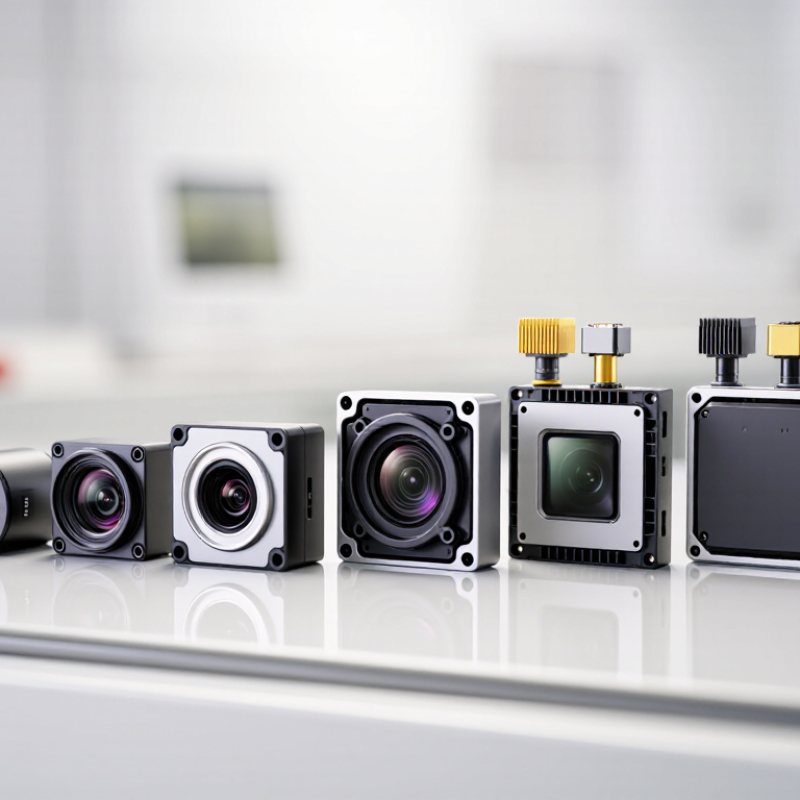
China Top 10 Infrared Imaging Module Suppliers?

What Is an Infrared Imaging Module?

An infrared imaging module is a compact system that turns infrared radiation into image data. It usually combines an infrared detector, lens, readout electronics, and image-processing circuitry. Some modules also include temperature measurement and a digital output interface. In thermal imaging, the detector records differences in emitted heat; it does not need visible light. Near-infrared systems work differently and may rely on an external light source. Not just a sensor. The module’s wavelength range, resolution, field of view, frame rate, and thermal sensitivity determine what details it can capture. A narrow field of view, for example, can make a warm pipe easier to inspect from a distance.

Performance depends on the whole optical and electronic chain, not detector resolution alone. Lens quality, calibration, operating temperature, and image processing all affect the result.

Grand View Research estimated the global thermal imaging market at USD 4.63 billion in 2023 and projected a 7.7% compound annual growth rate from 2024 to 2030.

That market figure signals wider adoption, but it is not a module-only sales estimate. Buyers should compare published test conditions, especially thermal sensitivity and measurement accuracy. Specs can look neat on paper. Real scenes are messier: reflective metal, airflow, and changing ambient temperatures can distort readings. A module’s advertised accuracy therefore needs context, and installation tests remain important.

How Infrared Imaging Modules Work and Which Specifications Matter

China Top 10 Infrared Imaging Module Suppliers?

Infrared imaging modules convert heat into visible thermal patterns. A microbolometer absorbs long-wave infrared radiation, commonly within the 8–14 μm band. Its electrical resistance changes with temperature, then signal processing builds each pixel. The module usually includes a detector, lens, calibration system, processor, and digital interface. According to the 2024 MarketsandMarkets thermal imaging report, the sector is projected to grow at roughly 7% annually through the decade. That growth does not make every module suitable for every task.

Resolution, NETD, frame rate, and lens choice matter most. A 640 × 512 detector can reveal smaller heat differences than a 256 × 192 unit, but it usually requires more processing and costs more. NETD below 50 mK is often preferred for subtle temperature changes. A low NETD number is not magic. Lens focus, humidity, calibration, and mounting stability can still weaken the image. A 25 Hz module may suit inspection, while faster scenes need higher frame rates. The 2024 Fortune Business Insights thermal imaging analysis also identifies industrial monitoring and security inspection as major demand areas.

Tips: Check the complete optical path, not only detector resolution. Request thermal sensitivity at the intended temperature range. Test the module after warm-up, because drift can distort readings. Also verify interface latency, power consumption, operating temperature, and available calibration data. In field testing, specifications sometimes look better than real images. That gap deserves attention.

China Top 10 Infrared Imaging Module Suppliers? - How Infrared Imaging Modules Work and Which Specifications Matter

Infrared imaging modules detect long-wave infrared (LWIR) energy and convert it into an electronic image. The profiles below are supplier-neutral examples of common module configurations—not a ranking or a list of companies. Figures are representative market ranges; actual specifications vary by model and should be confirmed in the manufacturer's datasheet.

Profile Typical Detector / Resolution Typical Key Specifications How It Works / Main Strength Common Applications
1. Compact entry-level module Uncooled microbolometer; 160 × 120 or 256 × 192 pixels 8–14 μm spectral band; NETD commonly around 40–60 mK; compact lens options Absorbed infrared energy changes the detector elements' resistance; onboard electronics convert those changes into image values. Designed for cost and size efficiency. Basic presence detection, simple equipment monitoring, and embedded devices
2. General-purpose 256-class module Uncooled microbolometer; 256 × 192 pixels Often 12 μm or 17 μm pixel pitch; NETD typically below 50 mK, depending on the model Each detector pixel measures incident LWIR energy; image processing applies correction and maps the measurements to a thermal image. Building inspection, security devices, and handheld thermal viewers
3. 384-class inspection module Uncooled microbolometer; 384 × 288 pixels 8–14 μm band; NETD commonly in the 30–50 mK range; multiple focal-length options More pixels provide finer spatial detail than lower-resolution modules when lens, distance, and target size are comparable. Electrical inspections, predictive maintenance, and process monitoring
4. 640-class high-detail module Uncooled microbolometer; 640 × 512 or 640 × 480 pixels Common pixel pitches include 12 μm and 17 μm; NETD is model-dependent and may be below 40 mK A higher pixel count can reveal smaller thermal features at a given field of view, but does not by itself determine detection range. Professional thermography, industrial inspection, and perimeter monitoring
5. Wide-field module Commonly 256 × 192 or 384 × 288 pixels Short focal-length lens; broad field of view; 8–14 μm band is common for uncooled LWIR A wide-angle lens covers more scene area, trading image detail per degree of view for broader coverage. Room monitoring, robotics, and situational awareness
6. Narrow-field / long-range module Commonly 384 × 288 or 640 × 512 pixels Longer focal-length lens; field of view depends on lens and detector format; optional motorized focus on some systems A narrower field of view places more detector pixels across a distant target; atmospheric conditions and target size also affect performance. Long-distance observation, border monitoring, and large-site security
7. Radiometric measurement module Typically 256 × 192 to 640 × 512 pixels Temperature measurement range is model-specific; accuracy is often specified as ±2°C or ±2% of reading under stated conditions Calibrated pixel values are mapped to apparent temperature. Emissivity, reflected temperature, distance, and the measurement setup affect accuracy. Thermal process control, equipment diagnostics, and temperature alarms
8. High-frame-rate module Resolution varies; commonly 256 × 192 to 640 × 512 pixels Frame rates commonly include 25/30 Hz; higher rates are available in some configurations and may depend on interface or export restrictions Repeated detector readout captures changing thermal scenes. Frame rate, exposure/integration settings, and processing latency influence motion handling. Fast-moving machinery, research, and dynamic event monitoring
9. Low-power embedded module Commonly 160 × 120 to 384 × 288 pixels Power consumption and startup time are design-specific; interfaces may include MIPI, USB, or a parallel digital output The detector, processing electronics, and output interface are integrated for use inside a host product; the host supplies control and display functions. Portable instruments, smart devices, and battery-powered sensors
10. Network-ready imaging module Commonly 384 × 288 or 640 × 512 pixels Digital video output; Ethernet or USB may be available; encoding, control protocol, and power input depend on the system Thermal frames are processed and transmitted to a host or network. Network capability is typically a system-level feature rather than a detector property. Remote monitoring, industrial networks, and integrated security systems

Specifications to compare: detector resolution and pixel pitch, spectral band, NETD, lens focal length and field of view, frame rate, radiometric accuracy and temperature range, calibration method, output interface, power, operating temperature, and module dimensions. NETD describes sensitivity to small temperature differences under specified test conditions; it is not the same as absolute temperature accuracy.

How to Evaluate Infrared Imaging Module Suppliers in China

China Top 10 Infrared Imaging Module Suppliers?

How to Evaluate Infrared Imaging Module Suppliers in China

When screening China’s top ten infrared imaging module suppliers, begin with measurable performance, not website claims. Request thermal sensitivity, spectral range, frame rate, resolution, and calibration data. Ask for test images captured at different distances and temperatures. A clear image at room temperature proves little.

Review the supplier’s engineering depth. Can its team explain detector selection, lens matching, image processing, and temperature drift? Check whether production uses documented inspection steps. Request sample quality reports, failure records, and corrective action examples. A polished demonstration can mislead. Real evidence matters more.

Assess the module under your actual working conditions. Test it inside your enclosure, with vibration, humidity, and changing heat sources. Confirm interface stability, power consumption, software compatibility, and delivery consistency. Examine sample units from different production batches. They should behave similarly. Also verify technical support, spare-part planning, warranty terms, and lawful export documentation. Be careful with unusually low prices; hidden calibration limits may appear later. My own evaluations would improve by recording every assumption before testing. Suppliers can look reliable until one overlooked detail changes the result.

China’s Top 10 Infrared Imaging Module Suppliers

China’s top 10 infrared imaging module suppliers serve security, industrial inspection, firefighting, robotics, and outdoor equipment markets. Their products commonly use long-wave infrared sensors in the 8–14 μm range. Typical options include 256×192, 384×288, and 640×512 resolutions. Some modules deliver NETD below 40 mK, helping users detect small temperature differences.

Performance depends on more than sensor resolution. Buyers should compare lens material, field of view, frame rate, calibration stability, power consumption, and interface compatibility. USB, MIPI, UART, and Ethernet connections are common. A reliable supplier should provide thermal testing records, sample data, production traceability, and responsive technical support. Certifications also require careful verification for the target market.

The strongest suppliers usually offer customization. They may adjust housing size, image algorithms, shutter control, or temperature measurement functions. Delivery consistency matters too. A perfect sample proves little if later batches drift. In practical evaluations, engineers should test modules beside hot pipes, moving machinery, and low-contrast targets. Laboratory results can look impressive.

No ranking is permanent. Supplier capabilities change with sensor access, software investment, and quality control. Some smaller manufacturers may outperform larger competitors in a narrow application. I would avoid choosing by price alone. A lower-cost module can create hidden expenses through unstable calibration, weak documentation, or difficult integration. Independent testing remains necessary.

This chart presents the principal infrared spectral bands used in imaging modules available in China. The wavelength ranges are standard industry definitions and are shown for technical comparison rather than as company-specific performance or ranking data.

Key Industries Served by China’s Leading Suppliers

China’s leading infrared imaging module suppliers serve far more than surveillance projects. Their modules support industrial inspection, smart manufacturing, firefighting, transport, agriculture, medical research, and outdoor equipment. In factories, thermal cameras reveal overheated bearings, loose electrical connections, and uneven furnace temperatures. Maintenance teams can act before a production line stops. That is practical value.

Fire and rescue teams use compact modules to locate heat through smoke or darkness. Transport systems monitor engines, batteries, and brake components. Agricultural users study crop stress and irrigation patterns through temperature differences. Medical and scientific applications require stricter calibration, traceability, and data protection. Supplier experience matters here. Engineers should verify detector sensitivity, spectral range, frame rate, lens options, and operating temperature. A low-cost module may look attractive, yet unstable readings can create expensive decisions. That risk is easy to underestimate. Leading suppliers often provide integration guidance, sample testing, and technical documentation. Still, published specifications cannot replace field validation.

Tips: Request raw thermal data, not only polished images. Test modules in humid workshops, bright sunlight, and sudden temperature changes. Check calibration intervals, technical support, and delivery consistency. Ask whether firmware updates affect existing interfaces. I have seen promising prototypes fail after vibration testing. That lesson remains useful. Also, define the target industry before choosing resolution. Higher pixel counts are not always better. A stable sensor, suitable optics, and reliable software may deliver better results.

FAQS

How does an infrared imaging module create a thermal image?

A microbolometer absorbs long-wave infrared energy, often within the 8–14 μm range. Temperature changes alter its electrical resistance. Processing converts those signals into pixels.

Which specifications should I compare?

Check resolution, NETD, frame rate, and lens options. A 640 × 512 detector can show finer detail than a 256 × 192 unit. It may also require more processing and cost more. Numbers are not everything.

What does NETD tell me?

NETD indicates how well a module detects small temperature differences. Below 50 mK is often preferred for subtle changes. Focus, humidity, calibration, and mounting stability still affect the image.

How do I choose a suitable frame rate?

A 25 Hz module may suit routine inspections. Fast-moving scenes can require a higher frame rate. Test the actual scene, not just a product demonstration.

How can I evaluate a supplier’s performance claims?

Request calibration data and thermal images taken at different distances and temperatures. Ask for sample quality reports and documented inspection steps. A polished demo proves little.

What testing should I do before choosing a module?

Test it inside your enclosure and under expected conditions. Include vibration, humidity, and changing heat sources. Check performance after warm-up. I would repeat the test across batches; one sample can mislead.

Which industries use these modules?

Factories use them to spot hot bearings, loose electrical connections, and uneven furnace temperatures. Other applications include transport, agriculture, firefighting, and research. Each use needs different optics and calibration.

Why can a low-cost module be a poor choice?

Unstable readings or limited calibration can lead to costly decisions. Check power use, interface stability, software compatibility, support, and delivery consistency. The hidden detail matters.

Conclusion

An Infrared Imaging Module is a compact optical and electronic unit that detects infrared radiation and converts it into visual or digital data. This article explains how these modules work, including the roles of infrared sensors, lenses, signal processing, calibration, and image output. It also highlights important specifications such as spectral range, resolution, thermal sensitivity, frame rate, focal length, operating temperature, size, power consumption, and interface compatibility. Understanding these factors helps buyers select a suitable solution for different technical requirements.

The article also presents a practical framework for evaluating suppliers in China, focusing on product consistency, research and development capabilities, manufacturing quality, customization options, testing procedures, delivery reliability, technical support, and cost efficiency. It introduces ten leading supplier types without relying on brand promotion and discusses the industries they commonly serve, including industrial inspection, building maintenance, transportation, environmental monitoring, security, agriculture, medical research, and smart equipment. The goal is to help readers compare suppliers objectively and make informed purchasing decisions.


Charlotte

Charlotte

Charlotte is a seasoned marketing professional with a deep understanding of the company's portfolio and a passion for elevating its presence in the market. With a keen eye for detail and a commitment to excellence, she ensures that our professional blog is regularly updated with insightful articles......