How to Choose the Best Thermal Camera Core from China?

Time:2026-10-05 Author:Liam
0%

Choosing the right Thermal Camera Core from China requires more than comparing resolution and price. A reliable selection begins with the application. Security monitoring, industrial inspection, firefighting, and vehicle night vision demand different performance levels. One core cannot serve every purpose.

Dr. Gerald C. Holst, a respected electro-optical imaging specialist, states, “A detector is only one part of the imaging system.” This principle remains highly practical. Buyers should examine detector type, spectral range, NETD, frame rate, calibration stability, shutter behavior, and lens compatibility. A 384 × 288 core may outperform a 640 × 512 model in a poorly matched enclosure. Specifications can mislead. Field performance matters more.

Practical evaluation should include sample testing under real conditions. Check image clarity through glass, fog, vibration, and changing temperatures. Ask the Chinese manufacturer for calibration records, quality certificates, test reports, and production traceability. Inspect whether the firmware supports your display, control board, and communication protocol. Confirm technical support before signing a large order. Supply continuity also deserves attention.

Cost matters. It is not everything.

An inexpensive Thermal Camera Core can create hidden expenses through unstable images, frequent recalibration, or delayed engineering support. However, higher pricing does not automatically prove better quality. This is where careful comparison becomes essential. Review several suppliers, request identical test conditions, and record every result. My own judgment would remain cautious without long-term samples and factory verification. The best choice balances measurable performance, integration risk, supplier reliability, and the realities of your final product.
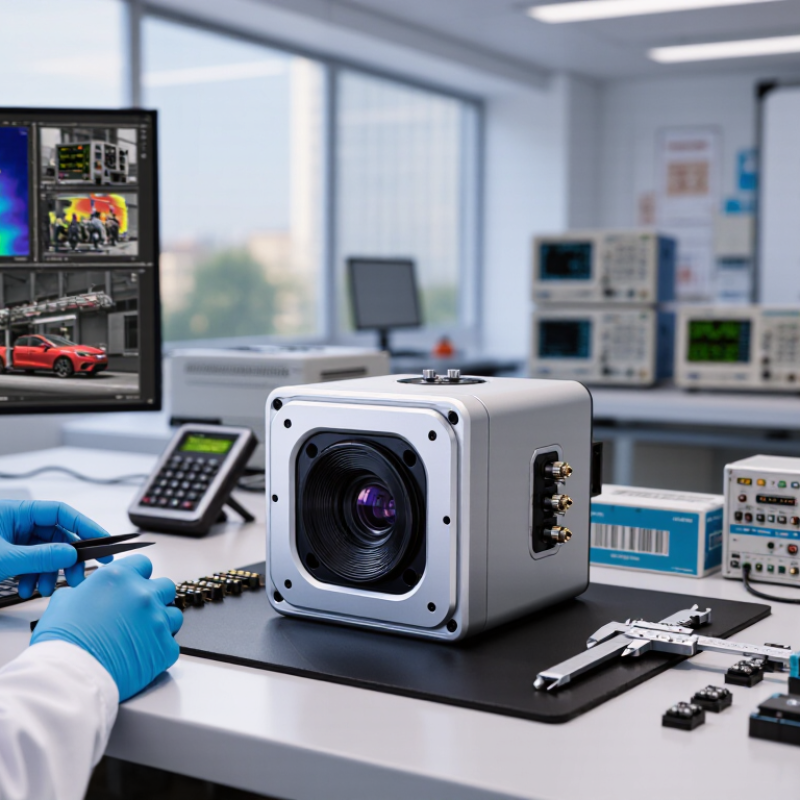
How to Choose the Best Thermal Camera Core from China?

Thermal Camera Core Basics and Key Performance Metrics

A thermal camera core converts infrared radiation into measurable temperature patterns. Most uncooled modules operate in the long-wave infrared range, commonly 8–14 µm. Resolution defines visible detail, while pixel pitch influences lens design and image clarity. NETD, measured in millikelvins, indicates sensitivity to small temperature differences. Lower NETD can reveal warm handprints on a metal panel more clearly. However, a low specification alone cannot guarantee reliable field images.

When evaluating a thermal camera core from China, request radiometric files, calibration records, and test conditions. Ask whether readings remain stable across the stated operating temperature range. Check frame rate, startup time, shutter behavior, and image latency before integration. A 256 × 192 sensor may suit basic inspection, while higher resolution helps identify distant targets. Lens selection changes field of view, detection distance, and edge distortion. Test real scenes. I would compare the same target indoors, at dawn, and after rain. These conditions expose weaknesses that clean laboratory targets may hide.

Interfaces also matter. Confirm power consumption, connector drawings, software documentation, and update procedures in writing. Housing strength and sealing deserve attention in dusty or humid installations. I have seen promising prototypes fail because calibration drift was checked only once. That mistake is easy to repeat. Compare three samples, not one. Record ambient temperature, target distance, emissivity settings, and measured error. Supplier communication is part of reliability, because clear technical answers often matter as much as impressive specifications.

Define Your Application and Thermal Imaging Requirements

How to Choose the Best Thermal Camera Core from China?

Define Your Application and Thermal Imaging Requirements

A thermal camera core should match the job, not merely the advertised resolution. Begin by describing the scene in practical terms. Will it inspect electrical cabinets, monitor machinery, detect people, or support outdoor observation? Each application needs different thermal sensitivity, measurement accuracy, and lens coverage.

In field testing, a narrow lens helps identify small hot spots from a distance. A wider lens captures more equipment but reduces detail. For close inspections, a 320 × 256 core may be sufficient. Higher resolution becomes valuable when targets are small or far away. Consider NETD carefully. A lower value can reveal weaker temperature differences. However, laboratory figures may not reflect dusty, humid, or vibrating environments.

Temperature range matters too. A core designed for industrial furnaces may perform poorly during low-temperature inspections. Check calibration methods, accuracy across the full range, and whether radiometric data is available. Frame rate also affects usability. Slow imaging can make moving targets appear unclear.

Keep the interface practical.

Confirm power input, video output, control protocols, enclosure space, and software compatibility before purchasing samples. I have seen projects fail because the core fitted mechanically but lacked suitable data access. Request test footage from a scene similar to yours. Better still, evaluate samples under realistic conditions for several days.

No specification sheet tells the whole story. Installation distance, atmospheric conditions, and operator experience can change results. Define these limits honestly before comparing suppliers.

Compare Core Types, Resolutions, and Spectral Ranges

When selecting a thermal camera core from China, compare the detector type before comparing pixel counts. Uncooled microbolometer cores are common, compact, and economical for building inspection, security, and equipment monitoring. They usually operate without mechanical cooling. Cooled cores provide higher sensitivity and faster response, but they require more power, careful integration, and stricter thermal management. Small errors matter. Ask for calibration records, NETD data, frame-rate stability, and test images taken at several temperatures.

Resolution affects detail, but it does not work alone. A 640×512 core can reveal small components more clearly than a 256×192 core at the same distance. Yet lens choice, target size, focus accuracy, and image processing may reduce that advantage. Think beyond pixels. For broad inspection scenes, lower resolution may be practical. For circuit testing or narrow targets, higher resolution usually offers more useful information. I once overvalued pixel count during an early comparison. The resulting image looked sharp, but temperature readings were less consistent than expected.

Spectral range should match the material and application. Long-wave infrared, commonly 8–14 micrometers, performs well for many everyday thermal measurements. Mid-wave infrared, often 3–5 micrometers, can capture hotter targets and support specialized analysis. Check atmospheric transmission, reflective surfaces, operating temperature, and calibration method. Test it yourself. Request raw sample images, uniformity results, and measurements against a trusted reference source. A supplier’s written specifications are helpful, but independent verification remains necessary. Surface emissivity can still create misleading readings, even with a technically capable core.

Assess Chinese Manufacturers, Quality Control, and Certifications

Choosing the best thermal camera core begins with evidence, not catalog claims. Assess the Chinese manufacturer’s engineering team, production history, and application experience. Request factory audit records, process documents, and recent customer references. A reliable supplier should explain detector selection, image processing, calibration, and environmental testing clearly. Visit the production site when possible. Observe cleanliness, traceability, and operator training. Small details matter.

Quality control must cover the entire core life cycle. Review incoming detector inspections, assembly checks, firmware testing, and final performance verification. Ask for data on thermal sensitivity, frame stability, temperature measurement accuracy, and operating range. Request sample inspection reports from several production batches. Compare results, not promises. If a supplier only presents final inspection data, the earlier process remains uncertain. That is a warning sign. A perfect checklist is impossible, and some evaluation methods may need adjustment after field testing.

Certifications should match the product and target market. Verify ISO 9001 documentation, then examine relevant EMC, electrical safety, and environmental compliance reports. Check the certificate number, issuing organization, validity period, and exact product scope. A genuine certificate can still be irrelevant to your thermal core. Ask whether testing covered the finished module or only selected components. Confirm export documents and technical files are consistent. Also review warranty terms, failure analysis procedures, and replacement timelines. Leave room for questions. Suppliers who accept technical scrutiny usually provide more dependable cooperation.

How to Choose the Best Thermal Camera Core from China?

Resolution is a practical starting point when comparing uncooled thermal camera cores. Higher pixel counts provide more detail, while NETD, frame rate, calibration stability, environmental testing, ISO 9001 quality systems, and applicable CE, RoHS, or IEC 60529 requirements should also be verified during supplier assessment.

The chart shows commonly specified uncooled thermal detector formats. Pixel count is calculated as horizontal pixels × vertical pixels; it is not a ranking of any specific manufacturer or brand.

Evaluate Pricing, Integration Support, and Long-Term Reliability

Choosing the best thermal camera core from China requires more than comparing the lowest quotation. Ask for a complete cost breakdown, including lenses, calibration, shipping, software tools, and technical support. A cheaper core may need custom drivers or repeated testing later. That expense grows quickly.

Request a working sample before placing a large order. Test image stability, frame rate, temperature measurement, and performance in low-contrast scenes. Check whether the supplier provides SDKs, communication protocols, wiring diagrams, and integration guidance. Clear documentation reduces engineering time. Ask how quickly engineers respond to software and hardware questions. Response quality matters.

Long-term reliability deserves careful attention. Review operating temperature tests, calibration procedures, component availability, and firmware update policies. Ask for realistic warranty terms and a documented repair process. Confirm whether replacement units can be supplied after several years. That matters. A supplier should explain production changes instead of hiding them. Field experience is useful, but it is not perfect evidence. Request test reports, customer references, and sample videos from similar applications. Also inspect packaging and connector protection; small physical details often cause failures in transport or outdoor use. I would avoid relying on verbal promises alone. Written specifications, acceptance criteria, and traceable test records provide stronger protection for a long project.

FAQS

What does a thermal camera core do?

It converts infrared radiation into measurable temperature patterns. Most uncooled cores operate around 8–14 µm.

How do resolution and pixel pitch affect thermal images?

Resolution controls visible detail. Pixel pitch affects lens design and image clarity. Higher resolution helps identify distant or small targets.

What does NETD mean?

NETD measures sensitivity to small temperature differences. Lower NETD may reveal a warm handprint on a metal panel more clearly.

Is a lower NETD specification always better?

No. A low number cannot guarantee reliable field images. Dust, humidity, vibration, and calibration can change results.

How should I test a thermal camera core before purchasing?

Request a working sample. Compare three units, not one. Test indoors, at dawn, and after rain.

Which lens should I choose?

A narrow lens helps inspect small hot spots from a distance. A wide lens covers more equipment but shows less detail.

What technical documents should I request?

Ask for radiometric files, calibration records, test conditions, wiring diagrams, software documentation, and communication protocols.

Why do interfaces matter during integration?

Confirm power input, connectors, video output, control protocols, and software compatibility. Mechanical fit alone is not enough.

How can I compare total project cost?

Include lenses, calibration, shipping, software tools, technical support, and possible custom drivers. A low quotation may become expensive later.

What indicates long-term reliability?

Review operating-temperature tests, firmware policies, repair procedures, and replacement availability. Written records are stronger than verbal promises.

Conclusion

Choosing the best Thermal Camera Core from China requires a careful evaluation of technical performance, application needs, supplier capability, and long-term value. Start by identifying the intended use, such as industrial inspection, security, outdoor observation, or equipment monitoring, then define the required temperature range, image detail, response speed, sensitivity, and environmental durability. Compare available core types, resolutions, frame rates, and spectral ranges to ensure the selected module can deliver reliable images in the target conditions.

It is equally important to assess manufacturers through their quality-control procedures, testing methods, certifications, production consistency, and technical documentation. Pricing should be considered together with integration support, software compatibility, customization options, warranty terms, and replacement availability. A dependable supplier should provide clear communication, engineering assistance, and stable quality over time. By balancing imaging performance, total ownership cost, manufacturing reliability, and after-sales support, buyers can select a Thermal Camera Core that meets both current requirements and future product development needs.


Liam

Liam

Liam is a dedicated marketing professional with a profound expertise in the industry, where he excels at highlighting the unique advantages of our core products. With a keen understanding of market trends and consumer needs, Liam frequently updates our company’s professional blog, providing......