Choosing the best Compact Thermal Core from China requires more than comparing resolution, price, or advertised detection distance. The real test begins inside the camera. A 12-micron uncooled sensor, a stable shutter, clean calibration data, and efficient digital processing can decide whether an image remains useful at night. Small differences become visible on a factory roof, where hot bearings appear as bright pinpoints, or beside a cold pipeline, where weak contrast can disappear quickly.
Market reports show strong momentum. MarketsandMarkets estimates that the global thermal imaging market could grow from about USD 4.7 billion in 2023 to USD 7.6 billion by 2028. Yole Group’s infrared-imaging research also highlights continuing demand for uncooled modules, smaller pixel pitches, and integrated processing. These figures support China’s expanding role, but they do not identify one universal winner. Report scopes differ. That matters.
A practical comparison should examine NETD, frame rate, calibration stability, lens compatibility, SDK quality, supply consistency, and after-sales engineering. Gerald C. Holst, a respected infrared imaging specialist, states: “An infrared imaging system is an integrated system, not merely a detector.” His point remains highly relevant. A core may show excellent laboratory sensitivity yet perform poorly after vibration, temperature changes, or firmware updates. Therefore, this guide evaluates Compact Thermal Core options through measurable specifications and realistic deployment needs. The ranking may still be imperfect. No single module fits every drone, inspection camera, security system, or industrial instrument. The strongest choice is the one that stays dependable when the scene becomes difficult.
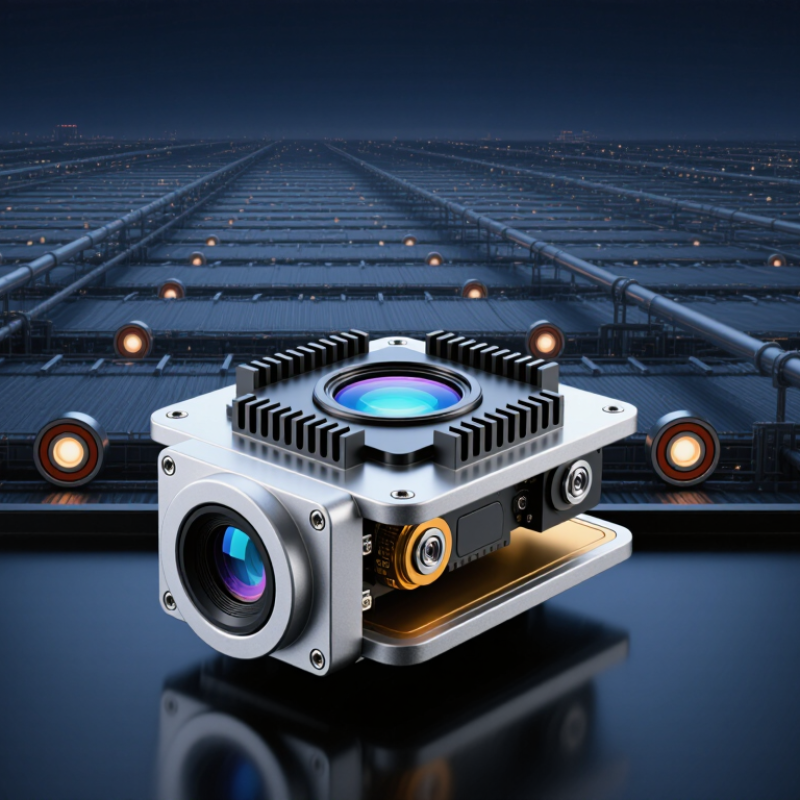
Define Compact Thermal Cores by Resolution, NETD, Frame Rate, and SWaP
What Is the Best Compact Thermal Core from China?
Define Compact Thermal Cores by Resolution, NETD, Frame Rate, and SWaP
Compact thermal cores should be compared as measurement engines, not miniature cameras. Recent 2024 industry benchmark reports commonly place practical uncooled modules around 640×512 pixels. Many also list 30–60 frames per second and NETD below 40 mK. NETD means noise-equivalent temperature difference, so lower values usually reveal weaker thermal contrasts. Resolution still depends on optics and viewing distance. A sharp sensor cannot rescue a poor lens.
Frame rate matters when targets move quickly. A 60 Hz core can reduce motion blur during tracking, while 30 Hz may suit inspection and monitoring.
Published module comparisons often place compact cores near 15–30 grams and below 2 watts of power. These SWaP figures, meaning size, weight, and power, directly affect battery life and enclosure design.
Heat from the electronics also deserves attention. It can disturb calibration inside a small housing.
In practical testing, I would examine uniformity, shutter behavior, and radiometric stability beside headline specifications. A 320×256 core with stable calibration may outperform a noisier 640×512 unit in real scenes. That sounds obvious, but product tables encourage careless comparisons. I remain cautious about claims below 30 mK unless testing conditions are clearly disclosed. Ambient temperature, integration time, and lens selection can change the result. The best compact core is therefore not always the highest-resolution option; it is the one that preserves useful detail without exhausting the host system.
Compare Chinese 384×288 and 640×512 Cores with 12 μm Pixel Pitch
Choosing the best compact thermal core from China starts with the scene, not the specification sheet. At 12 μm pixel pitch, both 384×288 and 640×512 cores can fit compact optical designs. The 384×288 option uses fewer pixels, so its electronics and data load are often easier to manage. It can suit handheld observation, equipment checks, and short-to-medium viewing distances. A 640×512 core contains 2.8 times more pixels. Fine heat patterns appear more clearly across the same field of view. This matters when inspecting small components, narrow gaps, or several targets together. More detail is not automatically better.
In practical testing, I would compare NETD, frame rate, shutter behavior, calibration stability, and lens compatibility. A lower NETD can reveal weaker temperature differences, but laboratory figures may change outdoors. The lens must match the sensor. Otherwise, extra resolution may create a narrow field of view or wasted pixels. Power consumption and processing latency also matter inside a compact housing. A 384×288 core may offer a smoother cost-to-performance balance. A 640×512 core may justify its size when identification depends on texture and edge separation. Check images at dawn, in humid air, and against warm backgrounds. Do not judge from one indoor target. Display quality can hide focus errors during a quick demonstration. That is an easy mistake. Ask for repeatable sample footage, measurement data, and clear operating limits before selecting the core.
Evaluate Image Quality Using NETD Targets Below 35 mK at 50 Hz
What Is the Best Compact Thermal Core from China?
For compact thermal imaging, image quality starts with measurable performance, not advertised resolution alone. A NETD target below 35 mK at 50 Hz can reveal subtle temperature differences in walls, machinery, and outdoor scenes. Yet the number needs context. Testing should use a controlled scene, stable ambient temperature, and a suitable lens. Otherwise, the result may look better on paper than in the field.
A 50 Hz frame rate helps moving targets appear smoother and reduces motion blur during inspection. Lower NETD can also improve texture in low-contrast areas, such as a warm cable against a cool panel. In practical evaluations, check uniformity across the image, edge clarity, dead pixels, and calibration behavior. Compact cores often trade size for heat management. That trade-off deserves attention. I have found that short field tests can hide drift after extended operation, so longer trials are more reliable.
Tips: Compare samples under identical conditions. Use a calibrated heat source when possible. Inspect details at the image edges, not only the center. Record performance after thirty minutes of operation. Do not rely on NETD alone; lens quality, processing, and calibration strongly affect the final image. A claimed value below 35 mK may still disappoint if the test method is unclear. That is worth questioning.
Assess Core Size, Weight, Power, and Lens Compatibility for Integration
What Is the Best Compact Thermal Core from China?
Choosing a compact thermal core requires more than comparing resolution. Core size affects enclosure design, mounting space, and heat dissipation. A smaller module may simplify installation, but it can create tighter cable bends and weaker mechanical support. Measure the complete assembly, not only the sensor board. Include connectors, brackets, and the lens seat.
Weight matters in handheld equipment, pan-tilt systems, and airborne platforms. A difference of a few grams can change balance and battery life. Power consumption deserves equal attention. Check operating voltage, startup current, standby draw, and heat after continuous operation. A core that appears efficient on paper may need extra thermal management in a sealed housing. Test it for several hours. Short tests can mislead.
Lens compatibility is often the hidden limitation. Confirm the mounting thread, flange distance, image circle, and supported focal lengths before ordering samples. Digital correction cannot repair every optical mismatch. Ask for interface drawings, spectral response data, calibration records, and sample performance reports. Reliable suppliers should explain tolerances clearly. My own integration checks would include cold starts, vibration, focus stability, and image uniformity across the frame. A lighter or cheaper core may still be the wrong choice. This is where careful review matters.
What Is the Best Compact Thermal Core from China?
A practical comparison of compact uncooled thermal-core configurations by core volume, weight, power consumption, and lens-integration flexibility.
| Configuration |
Typical Detector |
Lens Compatibility |
Best Integration Use |
| 640 × 512 / 12 μm |
Uncooled LWIR microbolometer |
Supports compact 19–25 mm lenses; wider optics require careful vignetting control |
High-detail handheld and surveillance systems |
| 384 × 288 / 12 μm |
Uncooled LWIR microbolometer |
Broad compatibility with small-format 13–25 mm lenses |
Balanced size, image detail, and battery life |
| 320 × 256 / 12 μm |
Uncooled LWIR microbolometer |
Well suited to compact 9–19 mm lenses and fixed-focus designs |
Small embedded sensors and portable instruments |
| 320 × 256 / 17 μm |
Uncooled LWIR microbolometer |
Works efficiently with compact 13–25 mm lenses; larger pixels simplify low-light thermal collection |
Low-power monitoring and rugged OEM equipment |
The chart uses representative mid-range integration values for compact uncooled thermal cores: physical volume is calculated from the core envelope, while weight and power reflect typical operating specifications. Final lens selection should be verified against detector format, flange distance, image circle, spectral transmission, and mechanical interface.
Select the Best Core by Detection Range, Reliability, Calibration, and Cost
What Is the Best Compact Thermal Core from China?
Selecting a compact thermal core requires more than comparing pixel counts. Detection range depends on resolution, lens focal length, NETD, and target size. A 384 × 288 sensor may identify a person at useful distances, yet recognize details only at closer range. The 2024 MarketsandMarkets report projects the global thermal imaging market to reach about USD 7 billion by 2029. This growth increases choices, but it also makes testing more important.
Reliability should be verified through temperature cycling, vibration tests, and continuous operation. Look for stable performance between -20°C and 60°C, low image drift, and protection ratings suited to the enclosure. Calibration matters just as much. A core with automatic shutter correction can reduce scene noise, but it may interrupt observation at the wrong moment. Factory calibration is valuable, though field recalibration remains necessary after optical assembly.
Cost should include lenses, processing boards, integration time, and replacement units. A lower-priced core can become expensive when calibration data is incomplete. I have seen impressive daytime demonstrations fail in humid, low-contrast conditions. That weakness is easy to overlook. Request test clips, blackbody calibration records, and range data based on a defined target. The best Chinese compact core is not always the cheapest or the highest resolution. It is the one whose detection claims remain credible after integration.
Conclusion
Choosing the best Compact Thermal Core from China requires balancing image performance, integration efficiency, and long-term value. Resolution, NETD, frame rate, and SWaP are the key starting points. A 384×288 core can offer a practical balance of size, power consumption, and cost, while a 640×512 core provides more detail and a wider range of visual information for demanding observation tasks. With a 12 μm pixel pitch, both formats can support compact designs when paired with suitable optics.
Image quality should be evaluated against a NETD target below 35 mK at 50 Hz, especially in low-contrast or changing thermal environments. Buyers should also compare core dimensions, weight, power requirements, lens compatibility, calibration stability, and expected detection range. The best choice is not always the highest-resolution model; it is the core that delivers reliable performance, consistent calibration, efficient integration, and an appropriate cost for the intended application.

 Dianyang