Global buyers are entering 2026 with broader choices in the Ir Imaging Engine market. Compact uncooled microbolometers remain popular for building inspection, security, and industrial maintenance. They usually operate in the long-wave infrared band and deliver practical performance without cryogenic cooling. Cooled MWIR engines offer sharper thermal contrast and faster response. They suit aerospace testing, scientific measurement, and demanding surveillance applications. SWIR engines, often built with InGaAs sensors, reveal details near the visible spectrum. They can support semiconductor inspection, laser alignment, and low-light imaging.
As infrared systems engineer John B. Hudson observed, “The detector is only one element in an infrared system.” That reminder still matters. Lens material, pixel pitch, calibration, image processing, and thermal stability can change field results. A high-resolution Ir Imaging Engine may struggle behind a poorly matched lens. A smaller engine may perform better when its optics and software are carefully integrated.
This guide compares leading engine types for global procurement teams. It considers wavelength, cooling method, sensitivity, output interface, size, power use, and service support. Real conditions matter. A dusty factory, a humid port, and a cold research site create different demands. Specifications can mislead.
Some assumptions deserve challenge. More pixels do not always produce better decisions. Lower cost may also increase integration work. Buyers should request sample images, calibration data, environmental ratings, and lifecycle information before approval. The right engine is not the most impressive one. It is the one that remains dependable after installation, testing, and daily use.
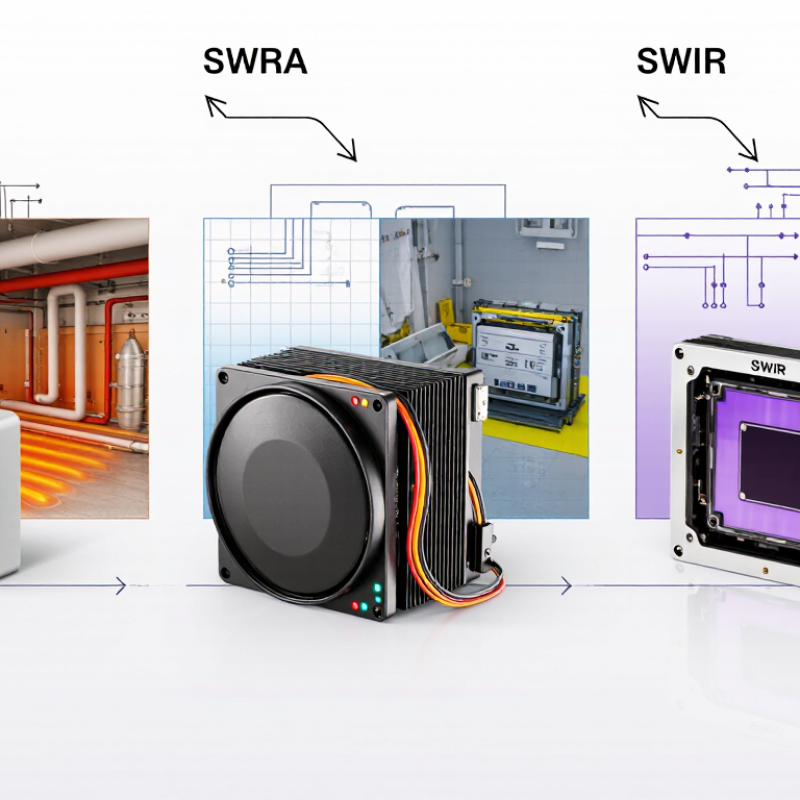
An IR imaging engine is the working core inside a thermal or infrared camera. It converts invisible infrared radiation into usable image data. The engine normally combines an IR detector, optical assembly, signal processor, firmware, and communication interface. Think of it as a compact imaging pipeline, not just a sensor.
Uncooled engines use microbolometer detectors and work well for building checks, electrical inspections, equipment maintenance, and security observation. They are usually smaller, quieter, and easier to integrate. Cooled engines use cryogenic cooling to detect weaker signals and produce sharper images over longer distances. They suit scientific measurement, aerospace testing, and demanding industrial inspection. SWIR engines cover short-wave infrared bands and can reveal differences in moisture, materials, and reflected light. MWIR and LWIR engines respond to different thermal conditions. The right choice depends on temperature range, target distance, resolution, lens design, and operating environment.
Practical evaluation matters. Ask for thermal sensitivity, calibration records, frame rate, power consumption, and interface details. A high pixel count can look impressive, yet it may not improve real measurements. Field teams should test the engine through glass, dust, vibration, or changing weather when those conditions are expected. No engine is perfect. Even experienced buyers can underestimate software integration time or lens limitations. I would also question vague performance claims, especially when test conditions are missing. Reliable suppliers should provide traceable specifications, sample images, and clear support terms. A careful comparison often saves more time than choosing the most expensive module.
An infrared imaging engine detects heat energy rather than visible light. Its optics collect infrared radiation from objects and focus it onto a detector array. Uncooled detectors commonly measure tiny temperature changes through materials that alter electrical resistance. Cooled detectors use cryogenic cooling to reduce thermal noise and capture weaker signals. This improves sensitivity, but adds size, power demand, and maintenance considerations.
The detector produces electrical signals for each pixel. A readout circuit gathers these signals and sends them to an analog-to-digital converter. Image-processing software then corrects pixel differences, removes noise, and maps temperature data into visible colors.
Non-uniformity correction is essential because two nearby pixels may respond differently to the same heat source. Calibration should also account for distance, atmospheric moisture, lens temperature, and reflective surfaces.
Specifications need careful interpretation. Resolution matters, but it cannot repair poor optics or unstable calibration. A high frame rate may help with moving machinery, while low noise benefits small temperature contrasts. Spectral range influences performance through smoke, humidity, glass, and other materials. No engine performs perfectly in every scene. That is the part buyers sometimes overlook. Field testing under realistic temperatures and mounting conditions can reveal drift, image lag, or false hot spots. Results may also change after repeated thermal cycling. Clear documentation, traceable calibration, and dependable technical support remain practical indicators of engineering quality.
The Main Types of IR Imaging Engines in 2026
IR imaging engines are compact cores that combine a detector, optics, processing, and output interfaces. In 2026, buyers mainly compare cooled MWIR, uncooled LWIR, and SWIR engines. Cooled MWIR engines usually operate near 3–5 μm. They deliver strong sensitivity for gas plumes, hot machinery, and long-range observation. However, cryogenic cooling adds size, power demand, cost, and maintenance points.
Uncooled LWIR engines typically use microbolometer arrays near 8–14 μm. They start quickly and suit handheld inspection, building surveys, robotics, and perimeter monitoring. A 2024 MarketsandMarkets assessment estimated the thermal imaging market at about USD 6.9 billion, with continued growth toward 2029. SWIR engines detect short-wave infrared signals, often around 0.9–1.7 μm. They can reveal moisture, semiconductor defects, and scenes hidden by some atmospheric haze. Their performance depends heavily on illumination and material reflectance. That detail is easy to overlook.
Tips: Match the engine to the target temperature, working distance, and required frame rate. Ask for NETD, calibration drift, lens compatibility, and power figures under real operating conditions. Reported market values differ because research firms define “thermal imaging” differently. Buyers should compare methodology, not only headline growth. A lower-cost engine may still fail when vibration, humidity, or heat changes. Field testing remains essential.
2026 Top IR Imaging Engine Types for Global Buyers
Key Performance Factors for Comparing IR Imaging Engines
Uncooled microbolometer engines suit compact inspection, building surveys, and perimeter monitoring. Cooled photon-detector engines deliver stronger sensitivity and faster response for long-range observation. SWIR engines support reflected-light imaging, while MWIR and LWIR engines detect emitted heat. According to MarketsandMarkets’ 2024 report, the thermal imaging market was valued at approximately USD 6.4 billion and may reach USD 10.2 billion by 2029. That growth increases choice, but not necessarily clarity. Numbers can mislead.
Start with NETD, resolution, frame rate, and spectral response. A 640 × 512 sensor provides 327,680 pixels, yet optics determine how much detail reaches them. Lower NETD helps reveal small temperature differences, especially on dull metal or damp concrete. Frame rates above 30 Hz can reduce motion blur, but they also increase processing and power demands. Yole Group’s recent infrared imaging analysis highlights smaller pixel pitches and advanced packaging as major development directions. Smaller pixels are useful. They can also expose lens and calibration weaknesses.
Check latency from photon capture to digital output. A delayed image may fail during robotic inspection, even with excellent sensitivity. Reviewers should request raw-data samples, calibration drift results, startup time, and performance at high humidity. IP ratings and operating-temperature tests matter more than a polished demonstration. I have seen buyers compare only resolution, then discover unstable readings near reflective surfaces. That mistake remains common. A clear test plan is often worth more than one impressive specification.
2026 Top IR Imaging Engine Types for Global Buyers
How Global Buyers Can Select the Right IR Imaging Engine
Selecting an infrared imaging engine starts with the scene, not the specification sheet. Define the target temperature, working distance, motion, and weather exposure. Small details matter.
Uncooled engines suit compact systems, lower power use, and routine inspection. Cooled engines usually deliver better sensitivity and faster detection of small temperature differences. They also require more power, maintenance, and budget. Choose the spectral band carefully. LWIR often performs well in general thermal monitoring, while MWIR can support high-temperature scenes and demanding atmospheric conditions.
Resolution is not the whole story. Check NETD, frame rate, calibration stability, and image processing quality together. A sharp image may still hide a weak thermal signal. Test the engine with the final lens, housing, window, and display. Laboratory results can change outdoors. Sometimes, they change more than expected.
Global buyers should confirm interface compatibility, spare-part access, documentation, and local technical support. Ask how calibration is verified after transport and temperature changes. Review electrical standards and applicable import requirements for each destination. A vendor’s response time can matter as much as its detector performance. Request sample images from similar operating conditions. Marketing samples are rarely enough. Teams sometimes select the most advanced engine and later discover that its power draw, software integration, or cooling needs exceed the platform’s limits. A smaller engine may perform better in the finished product. That trade-off deserves another review.
| IR Imaging Engine Type | Typical Spectral Band | Common Detector Technology | Cooling Requirement | Typical Resolution Options | Typical Frame Rate | Typical Sensitivity / NETD | Key Advantages | Main Limitations | Best-Fit Applications | Buyer Selection Priority |
|---|---|---|---|---|---|---|---|---|---|---|
| Uncooled LWIR Engine | 8–14 μm | Vanadium oxide or amorphous silicon microbolometer | No cryogenic cooling; operates near ambient temperature | Commonly 320 × 256, 384 × 288, 640 × 512, or 1280 × 1024 pixels | Approximately 25–60 Hz, depending on output mode and regulation requirements | Typically below 50 mK NETD; premium configurations may be below 30 mK | Low size, weight, power, and cost; fast start-up; suitable for continuous operation | Lower sensitivity and long-range performance than cooled engines; less effective for very small temperature differences or high-speed targets | Building inspection, predictive maintenance, firefighting support, security, transportation, mobile thermal cameras, and general industrial monitoring | Lowest total cost, compact integration, battery life, calibration stability, and availability of radiometric output |
| Cooled MWIR Engine | 3–5 μm | Indium antimonide or mercury cadmium telluride focal plane array | Cryogenic cooling, commonly using a Stirling or rotary cooler | Commonly 320 × 256, 640 × 512, or 1280 × 1024 pixels | Approximately 30–200 Hz, with higher rates possible in reduced-area modes | Often below 20 mK NETD; application-specific performance depends on optics, integration time, and operating temperature | High sensitivity, strong contrast, long detection range, and effective imaging of hot objects and fast events | Higher cost, power consumption, weight, start-up time, vibration, and maintenance requirements | Long-range surveillance, airborne imaging, industrial process monitoring, high-temperature inspection, research, and target tracking | Required detection range, target temperature, high-speed performance, cooler life, vibration tolerance, and export-control classification |
| Cooled LWIR Engine | 8–12 μm or approximately 8–14 μm | Mercury cadmium telluride or other cooled long-wave infrared detector technologies | Cryogenic cooling is normally required | Commonly 320 × 256, 640 × 512, or 1280 × 1024 pixels | Approximately 25–100 Hz, depending on detector format and operating mode | Often below 25 mK NETD in high-performance configurations | Excellent sensitivity to low-temperature differences, strong performance through some atmospheric conditions, and high image quality | More expensive and complex than uncooled LWIR; cooling system adds size, power draw, vibration, and service considerations | Specialized surveillance, scientific imaging, gas-related inspection, maritime observation, and demanding industrial applications | Low-temperature contrast, atmospheric path, continuous operating life, cooler reliability, and system integration envelope |
| SWIR Imaging Engine | 0.9–1.7 μm or extended ranges up to approximately 2.5 μm | Indium gallium arsenide; extended-range designs may use alternative compound semiconductor structures | Usually uncooled; cooling may be added for specialized low-light or scientific applications | Commonly 640 × 512, 1280 × 1024, or higher-resolution formats | Approximately 30–200 Hz, depending on resolution and interface configuration | Sensitivity is normally specified using low-light response or quantum efficiency rather than NETD | Uses reflected or emitted short-wave infrared; can provide improved detail through haze and supports laser, semiconductor, and material inspection | Generally cannot replace MWIR or LWIR for ordinary thermal imaging; performance depends strongly on available illumination and atmospheric conditions | Silicon inspection, solar-cell manufacturing, sorting, laser monitoring, low-light imaging, moisture analysis, and haze or smoke observation | Whether the application needs reflected-light imaging, spectral discrimination, laser compatibility, or material-specific contrast |
| Dual-Band MWIR/LWIR Engine | Typically 3–5 μm and 8–12 μm or 8–14 μm | Two integrated focal plane arrays or a multispectral optical architecture | Usually requires cooling for the MWIR channel and may use cooled or uncooled technology for the LWIR channel | Commonly 320 × 256 or 640 × 512 per channel; configuration varies by system design | Approximately 25–100 Hz per channel; synchronized operation may reduce the maximum rate | Channel-specific; cooled MWIR commonly offers lower NETD than uncooled LWIR | Combines complementary spectral information; improves target recognition, atmospheric assessment, and performance across changing backgrounds | Highest integration complexity, cost, size, calibration burden, and data-processing requirements among common engine configurations | Advanced surveillance, airborne systems, maritime imaging, target classification, research, and challenging all-weather observation | Need for multispectral data, channel registration accuracy, synchronization, optical design, processing capacity, and lifecycle support |
| High-Speed Cooled IR Engine | Most commonly 3–5 μm; specialized systems may use other infrared bands | High-speed cooled indium antimonide or mercury cadmium telluride focal plane array | Cryogenic cooling is required | Commonly 256 × 256, 640 × 512, or 1280 × 1024 pixels; reduced-area readout is often available | Approximately 100–1,000 Hz, depending on windowing, resolution, exposure time, and interface bandwidth | Often below 25 mK NETD at standard operating modes; high-speed exposure can affect sensitivity | Captures rapid thermal events, combustion, rotating machinery, shock events, and aerodynamic phenomena with limited motion blur | Large data volume, demanding synchronization, high power consumption, and potential sensitivity loss at very short exposure times | Research and development, high-speed testing, ballistics research, combustion analysis, vibration analysis, and advanced manufacturing | Required temporal resolution, exposure time, data interface, trigger functions, storage capacity, and synchronization accuracy |
It detects infrared energy linked to heat, rather than visible light. Optics focus this energy onto a detector array. Tiny temperature changes become electrical signals.
Uncooled engines measure heat with resistance-changing materials. They start quickly and need less power. Cooled engines reduce thermal noise with cryogenic cooling. They offer higher sensitivity, but add size, cost, and maintenance.
LWIR engines commonly suit building surveys, equipment checks, robotics, and perimeter monitoring. Their typical range is about 8–14 micrometers. Practical and compact.
Cooled MWIR engines often suit gas plumes, hot machinery, and long-range observation. Their typical range is about 3–5 micrometers. Cooling increases complexity.
SWIR engines often operate near 0.9–1.7 micrometers. They can reveal moisture, semiconductor defects, and some hazy scenes. Performance depends strongly on illumination and material reflectance.
No. Optics, calibration, and detector quality also control visible detail. A 640 × 512 sensor has many pixels, but weak optics can waste them. More pixels alone are not enough.
Lower NETD helps reveal small temperature differences. This matters on dull metal, damp concrete, or slightly warm components. Noise still changes with optics and operating conditions.
Test startup time, latency, calibration drift, humidity performance, vibration, and operating temperature. Check lens compatibility and power use. Ask for raw-data samples.A polished demonstration can hide problems. Field testing is better, though sometimes inconvenient.
An Ir Imaging Engine is the core optical and electronic module that converts infrared radiation into usable thermal images, enabling systems to detect temperature differences in darkness, haze, and challenging weather. This article explains how infrared energy is collected through optics, sensed by a detector, processed into digital data, and displayed as a clear image. It also introduces the main engine types expected in 2026, including cooled and uncooled designs, as well as solutions optimized for different spectral bands, resolutions, response speeds, and operating environments.
For global buyers, comparing an Ir Imaging Engine requires more than reviewing image resolution. Important factors include sensitivity, thermal stability, frame rate, power consumption, size, interface compatibility, calibration needs, durability, maintenance, and total ownership cost. The article provides a practical selection framework to help buyers match engine performance with applications such as industrial inspection, security observation, scientific measurement, transportation, and outdoor monitoring. By balancing technical requirements, integration conditions, supply reliability, and regulatory considerations, buyers can choose an efficient and dependable infrared imaging solution.

Dianyang